
Japandi interior design in Bangalore
Japanese restraint meets Scandinavian warmth: pale timber, natural textiles and a discipline about what is left out.
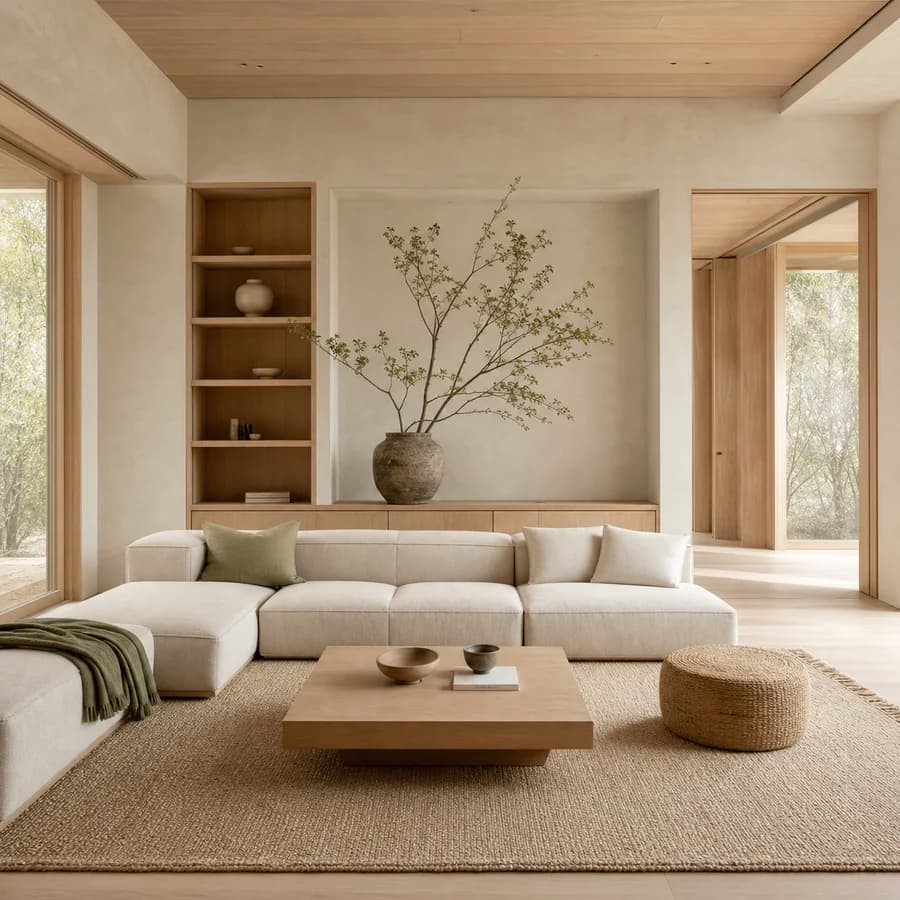
What makes a room Japandi
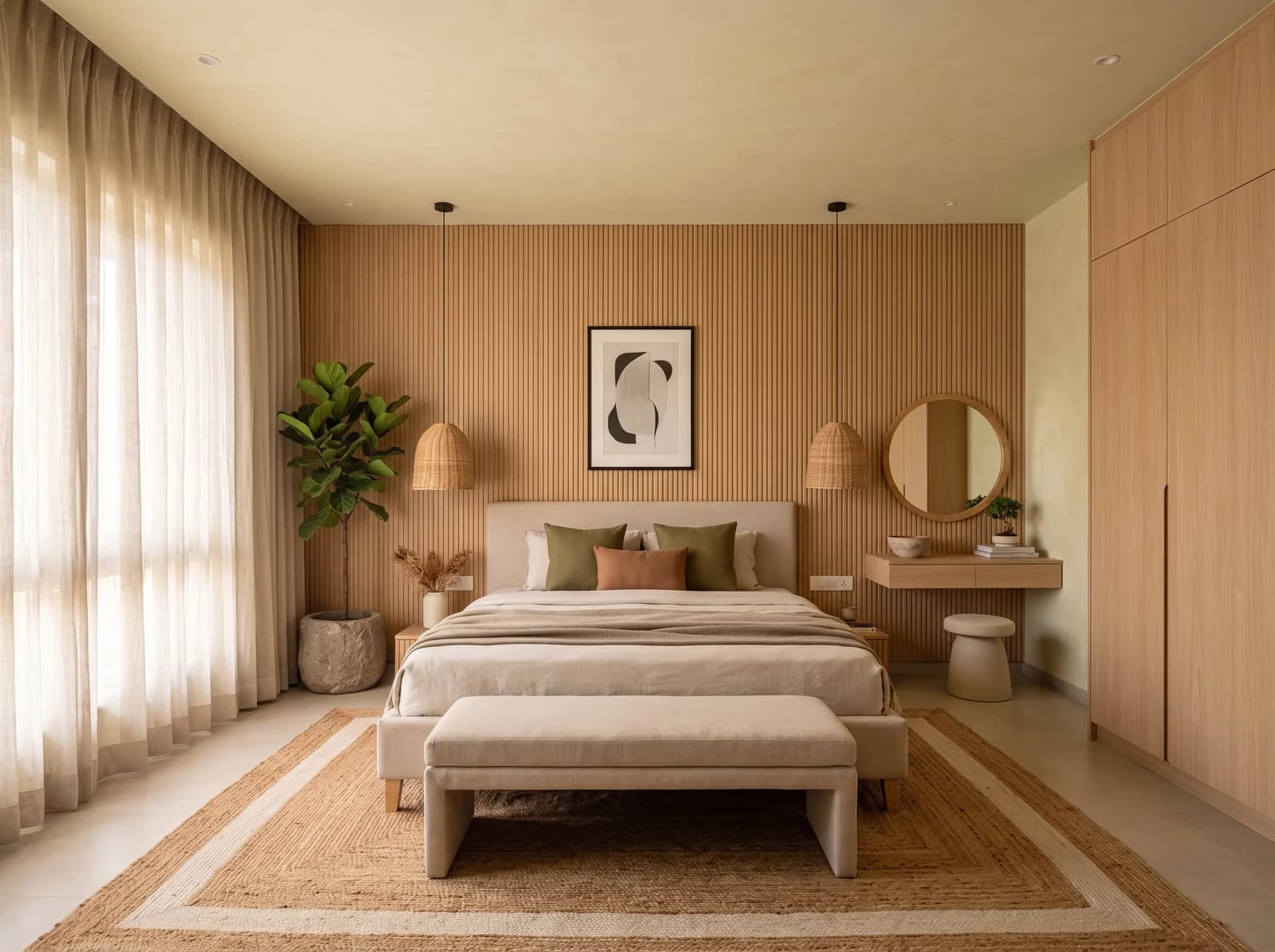
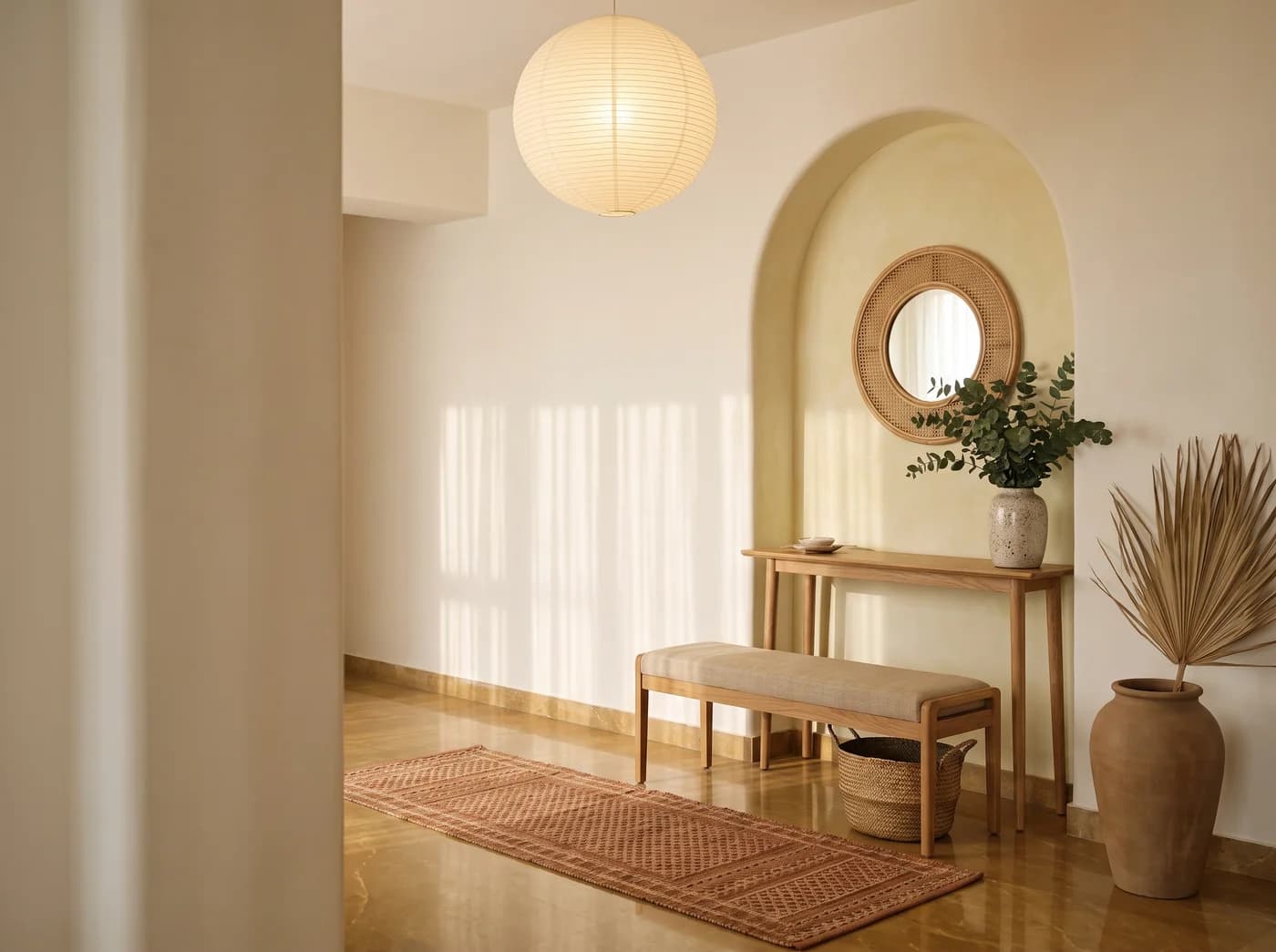
The style borrows the Japanese idea that a room is finished when nothing more can be removed, and the Scandinavian instinct for warmth in timber and wool. Neither is about emptiness; both are about proportion, light and the honesty of materials. Done well, a Japandi home feels quiet rather than sparse.
Low Horizons
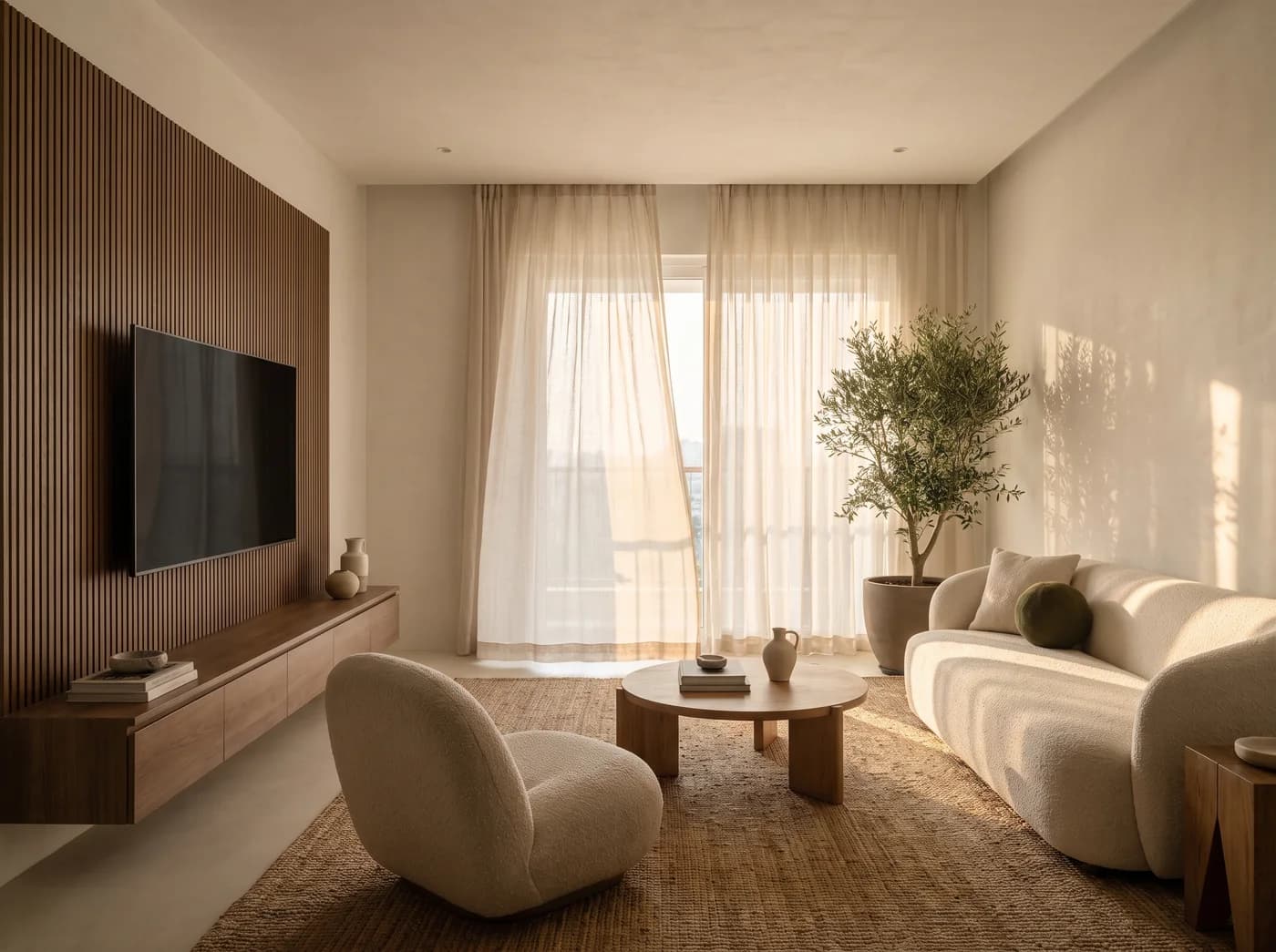
Sofas, beds and tables sit low, which makes ceilings feel taller and rooms calmer. Sightlines run uninterrupted from one end of the home to the other.
One Timber, Used Everywhere
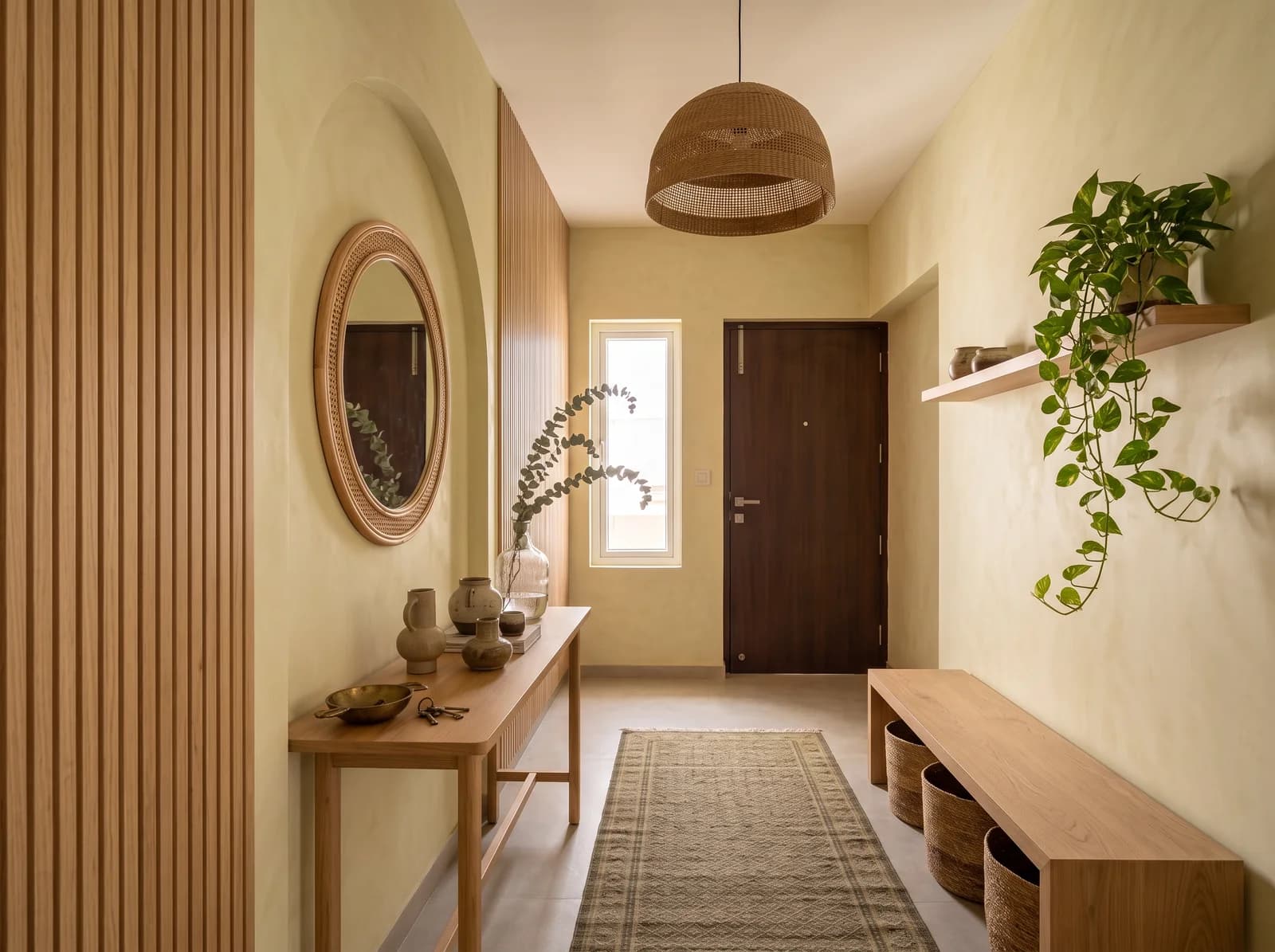
Pale oak or ash for floors, joinery and furniture alike — a single species carried through the home rather than a different wood in every room.
Textile Over Ornament
Linen, wool and cotton do the work that pattern and decoration do elsewhere: curtains to the floor, a rug with weight, a throw that has been used.
Storage That Disappears
Full-height, handleless joinery in the same tone as the wall, so the room's calm is not spent on a wardrobe.
Light, Softened
Paper, linen and frosted glass between the bulb and the eye; warm colour temperature throughout; nothing that glares.
What Japandi is made of
The palette is the style. Each of these is specified by grade and named in the quote, so what was drawn is what arrives.
- Pale oak and ash
- Lime-washed walls
- Linen and wool
- Paper and rattan shades
- Honed stone
- Matte black metal, sparingly
- Unglazed ceramics
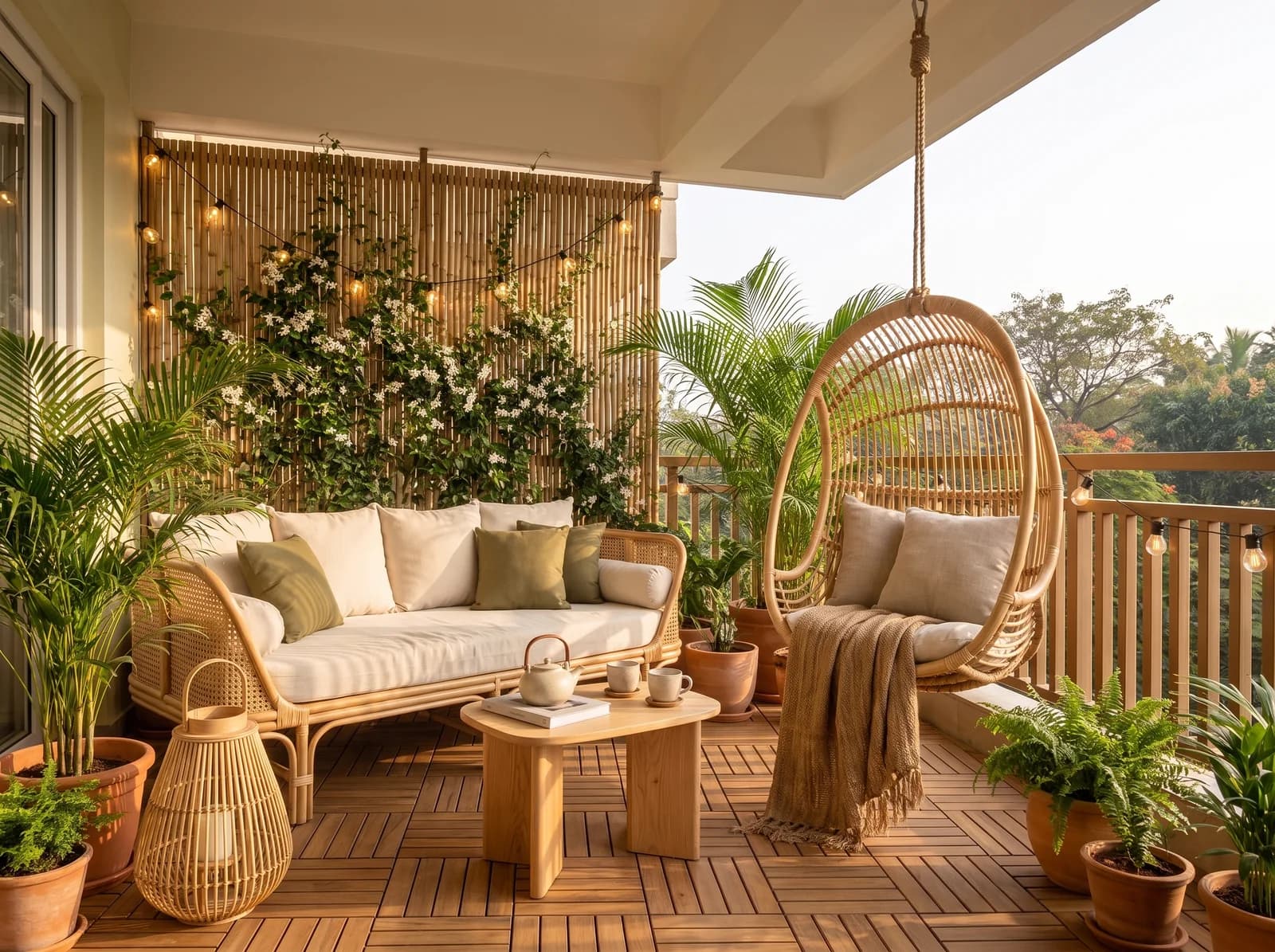
- Bamboo and cane
The rooms and homes it is made for
Apartments With Good Light
A 3 BHK with a bright living room becomes serene rather than small; the low furniture and single timber make the plan feel larger.
Primary Suites
A bedroom, dressing room and bathroom in one pale palette, with linen and warm light, is the most restful room the style produces.
Homes for People Who Work Hard
Calm the moment the door closes. The style's discipline about clutter is its greatest gift to a busy household.
Homes designed in Japandi
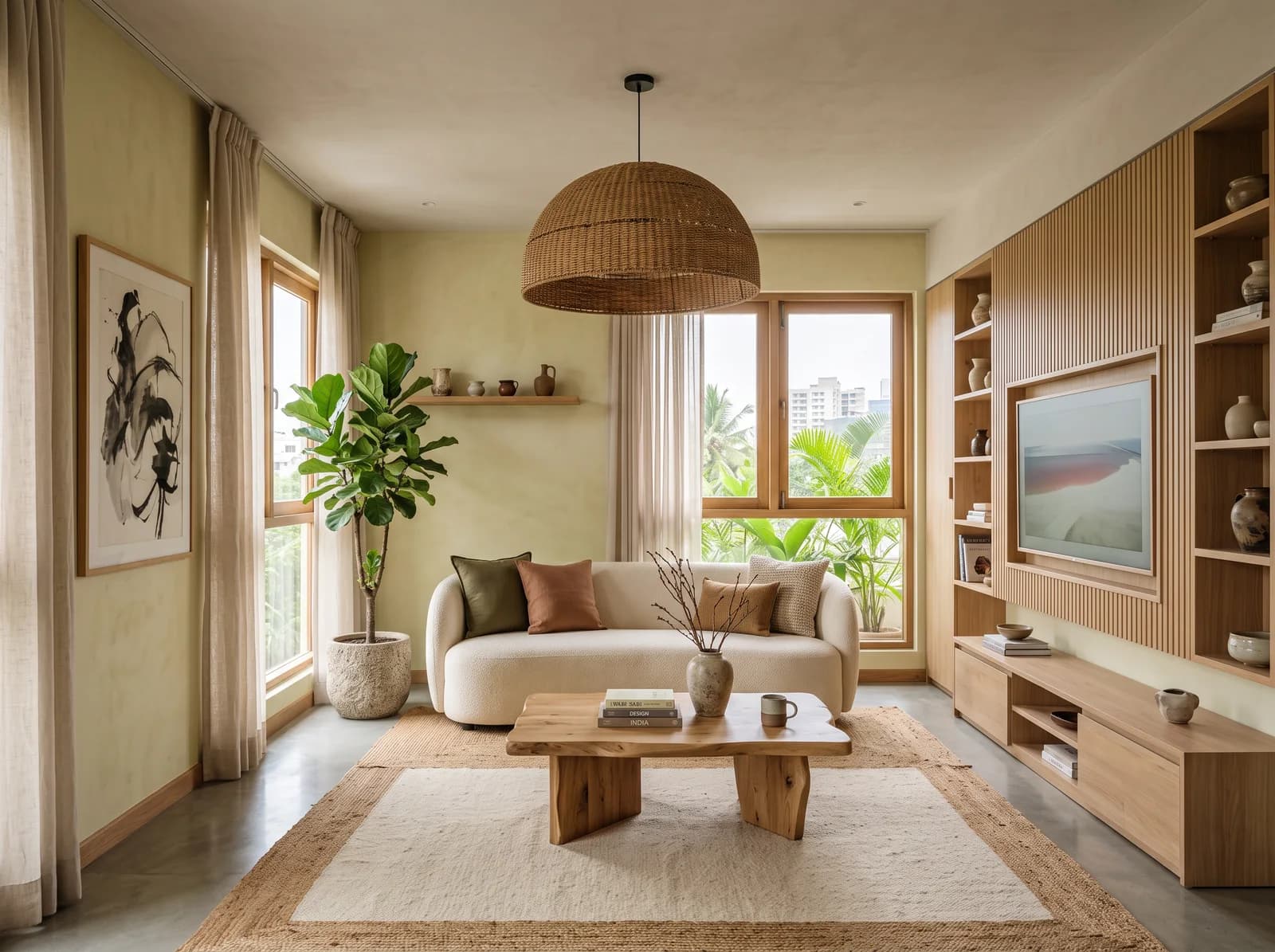
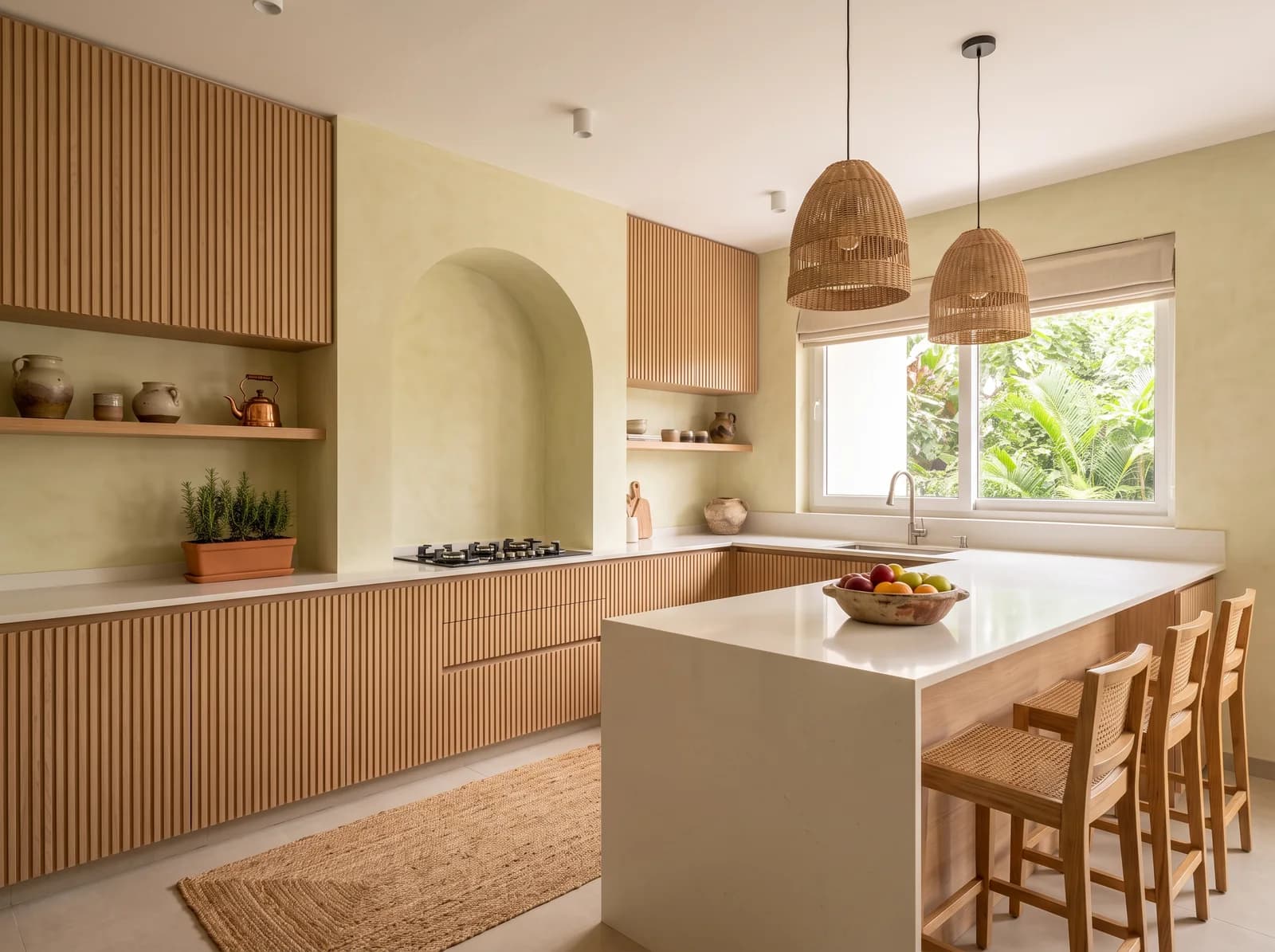
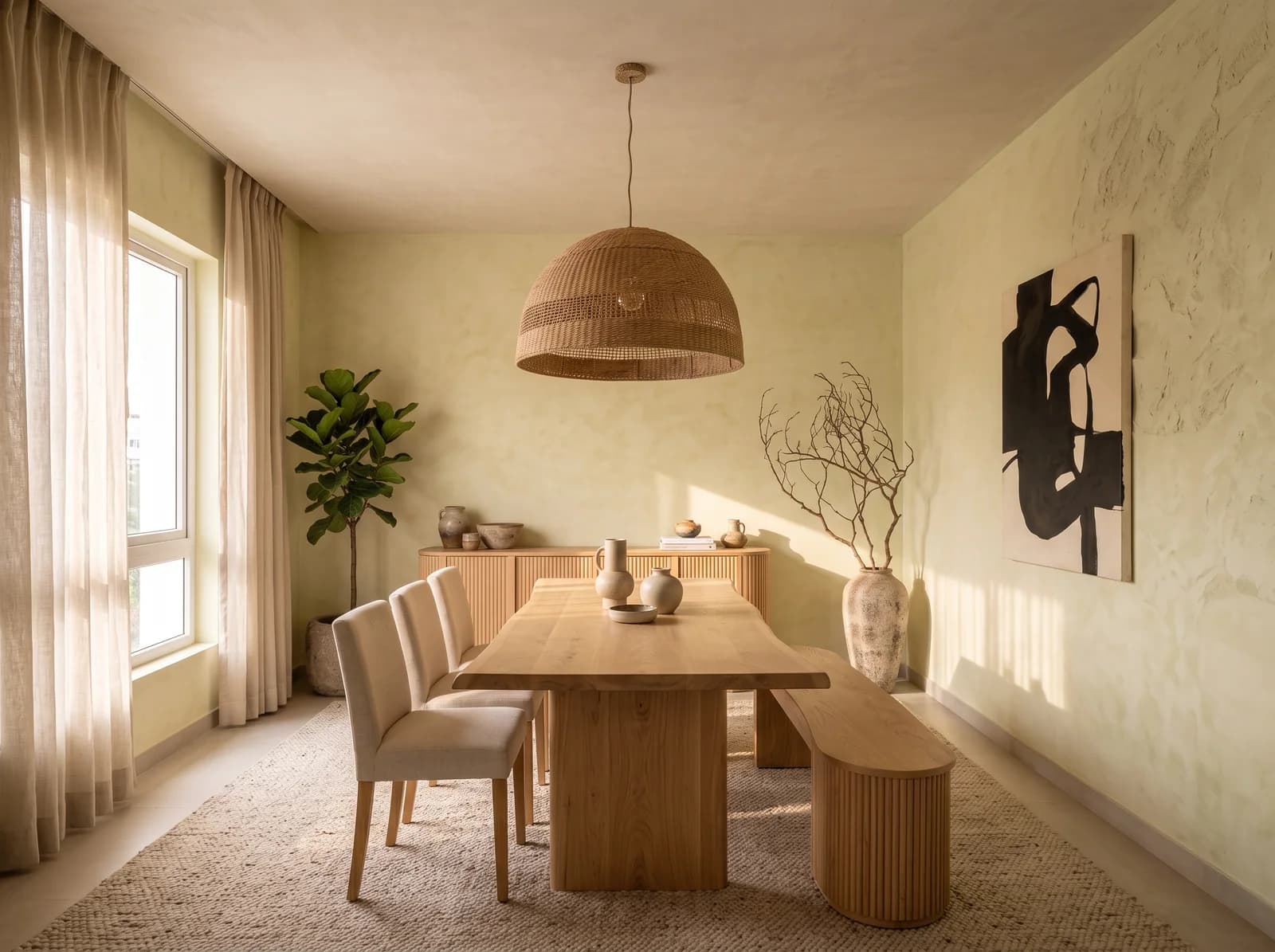
Japandi room concepts, with plans and costs
Before you begin
- Does Japandi work in an Indian home?
- Very well, with two adjustments: storage planned for how much an Indian household owns, and a kitchen built for daily cooking rather than the show kitchens the style is often photographed with. The pooja room, in pale timber and warm light, is one of the most beautiful rooms Japandi produces.
- Is Japandi expensive to build?
- It rewards fewer, better things: the timber, the linen and the joinery quality show, because there is nothing to hide them. The palette itself is not costly; the discipline is in specifying well and leaving things out.
- How is Japandi different from Soft Minimalism?
- They are neighbours. Japandi leans on pale timber, low furniture and a Japanese sense of restraint; Soft Minimalism is warmer and rounder, with plaster, bouclé and curves, and fewer visible wood tones.
- What are the rules of Japandi?
- Seven, if you want them as a list: natural materials, a muted palette, low furniture, empty space kept empty, craft over ornament, plants as the only pattern, and light allowed to do most of the decorating. The one that matters is the fourth — a Japandi room is decided by what is left out of it, which is why it is harder to do well than it looks.
- Is Japandi still in style in 2026?
- Yes, and it has stopped being a trend. The word arrived around 2020; the ideas behind it — pale timber, restraint, rooms built for calm — are older than the word and have not moved. What has changed is the palette, which has warmed: terracotta, olive and walnut now sit beside the oak where grey once did.
The other languages
See your home before you decide.
Send a floor plan and a short brief for your Bengaluru home. In 7 days, photorealistic views of three of your rooms. No obligation.
Luxury interiors from ₹11.99L · Design + execution, one studio