How to read an interior quote before you sign it
Two quotes for the same 3BHK, nine lakh apart. Neither is right until you can read them. The lines that matter, and the ones that are missing.
- Written by
- The Élara Studio
- Published
- Reading time
- 5 min read
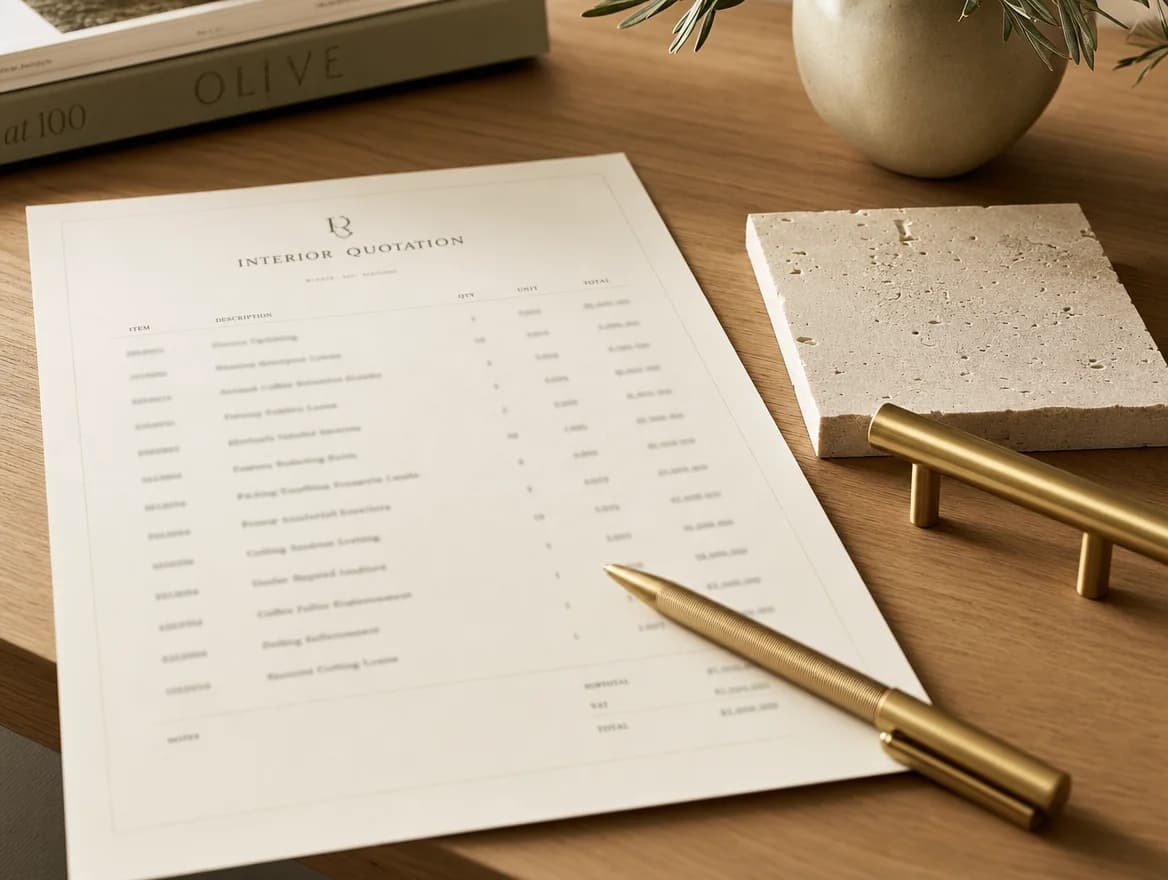
A reader sent us two quotes last month for the same 3BHK in Bellandur, one at ₹21 lakh and one at ₹30 lakh, and asked which was right. The honest answer was that neither could be judged from its total.
One listed rooms. The other listed running feet, board grades and hinge series. They were not two prices for the same thing. They were two different things. This is how we would read a quote, line by line, if a friend put one in front of us. It is also, unavoidably, a description of how Élara writes its own.
First, the unit
A quote that prices a room as a lump sum, Master bedroom wardrobe: ₹2,40,000, cannot be compared with anything, because you do not know what is in it. A quote in running feet or square feet of joinery, with a rate per unit and a specification per line, can. Ask for the second kind. If the studio cannot produce it, that tells you something about how the work will be run.

The plywood line decides year five
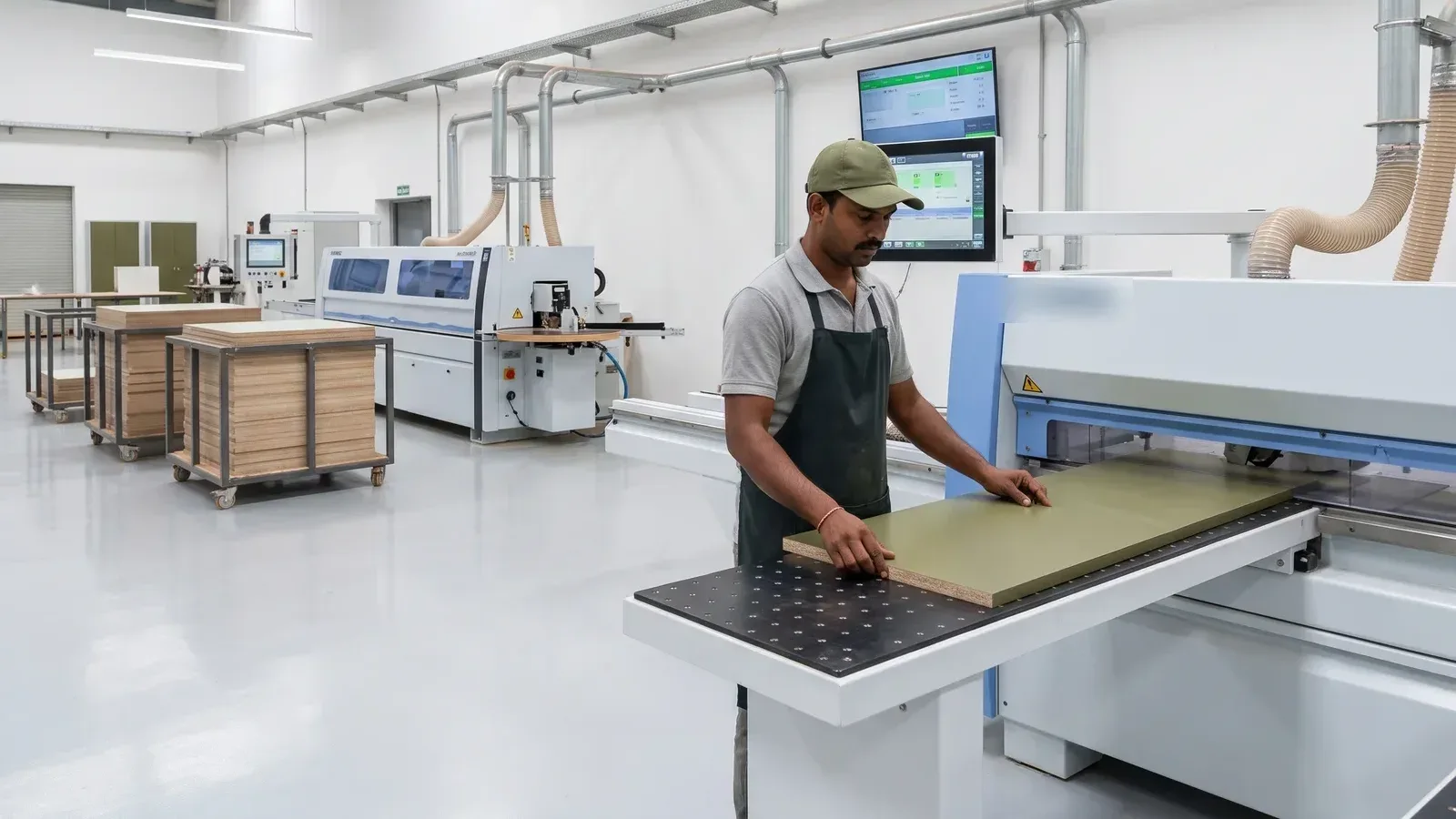
Everything you can see on a wardrobe is a skin on a board. The board is the quote's most important line, and the most commonly vague. A named manufacturer's grade-stamped board can be checked at delivery; good quality ply cannot. The words to look for are below, and the stamp on the sheet should match them.
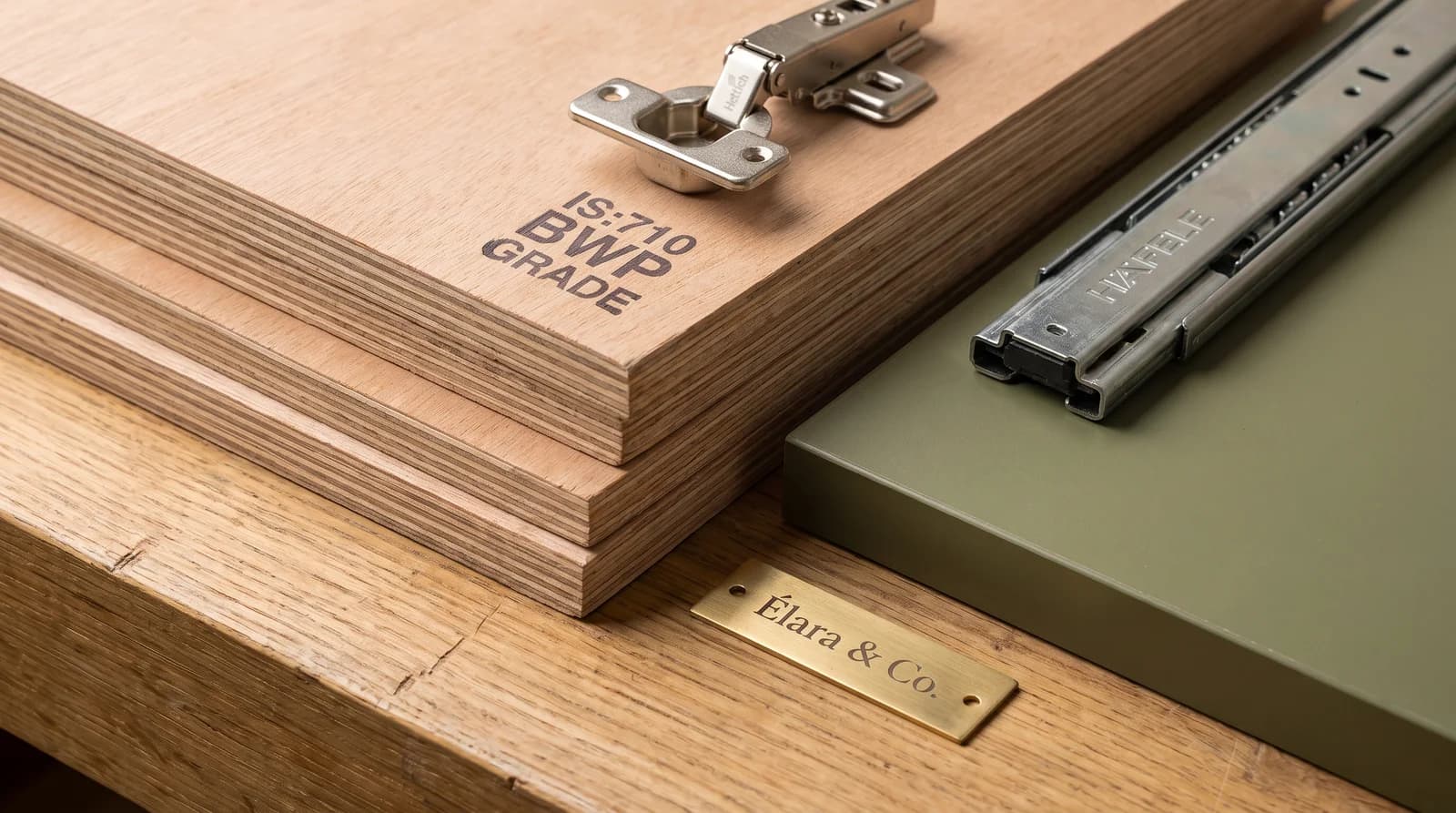
IS:710 stamped on the edge, HDHMR beside it, hardware in its box with the series on the label. This is what a specification looks like on the bench.
- IS:710 BWP (boiling water proof, often sold as marine ply) for anything near water: the kitchen, bathroom vanities, the utility. It costs more and survives a leak.
- IS:303 MR (moisture resistant) is fine for bedroom wardrobes and dry rooms, and honest studios say so rather than upselling BWP everywhere.
- BWR sits between the two and is often described as BWP. Ask which IS standard is being quoted, not which adjective.
- HDHMR for shutters that will take a lacquer or a routed profile; it holds an edge and a paint better than ply.
- Particle board and commercial ply are the words to be wary of unless a line explicitly explains why they are there and the price reflects it.
Hardware by make and series, not adjective
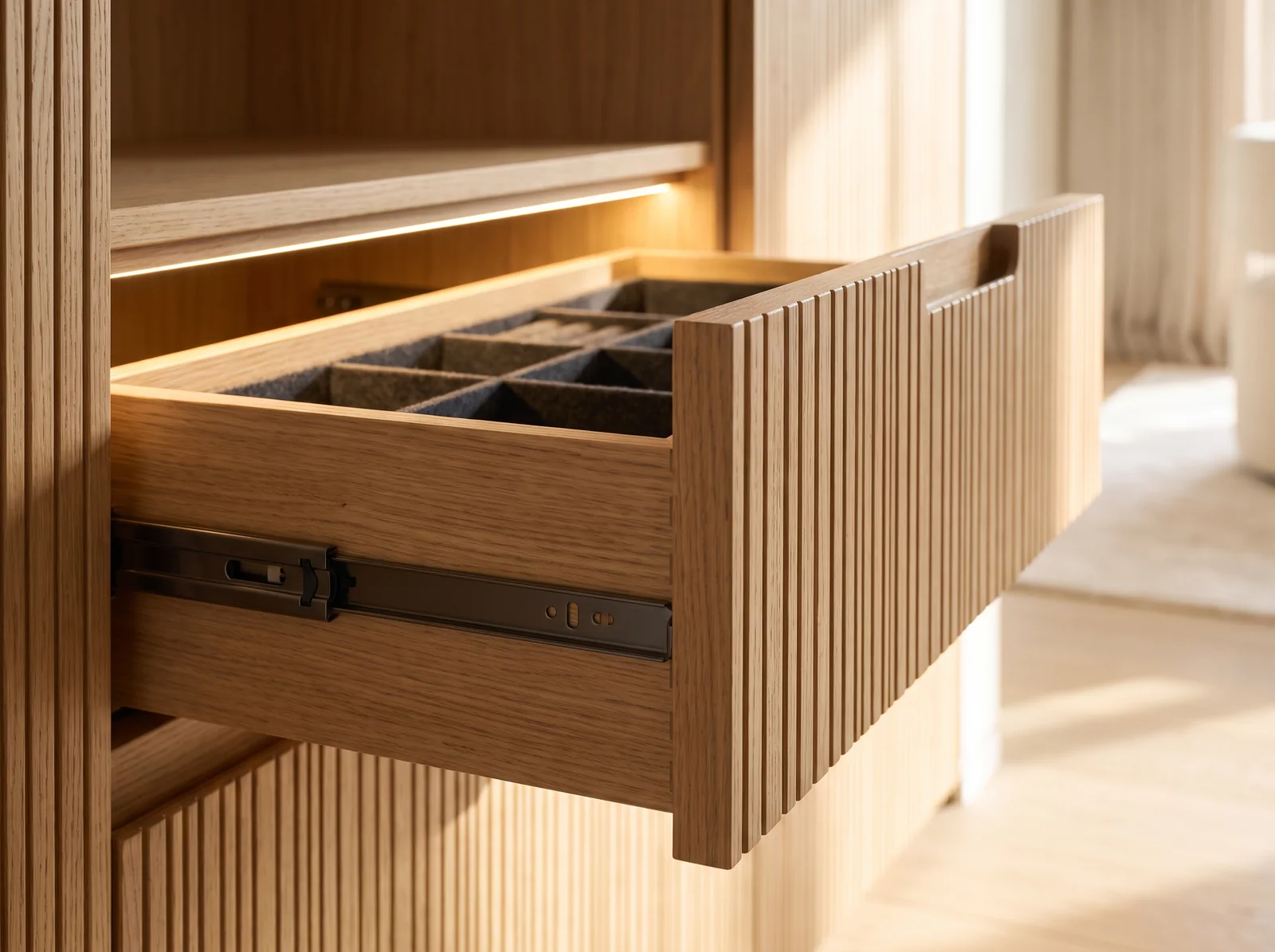
Premium soft-close hardware is not a specification. Hettich, Hafele and Blum each make several grades of hinge and channel, tested to different cycle counts, and the difference between the cheapest and the best is about ₹400 a hinge and ten years of use. A good quote names the make and the series on every line: hinges, drawer channels, wardrobe lift-ups, the corner unit mechanism. You can then look each one up, and check the box at delivery.
The finish, with a code
Laminate should carry a manufacturer and a code, so the sample you approved is the sheet that arrives. Veneer should say the species and whether it is natural or reconstituted. Lacquer should say PU or PU-duco and the number of coats. Stone should say the lot, because two slabs of the same name are not the same stone. Vagueness here is where substitutions happen on site.
The exclusions list
The most expensive part of a quote is often the paragraph at the bottom. Read it before the total. The things that are routinely outside a quote for a Bengaluru fit-out:
- 01Civil work: any wall that moves, any floor that is re-laid, waterproofing.
- 02Electrical rework beyond a fixed number of points, and all the automation.
- 03Painting, which is often the whole house and not a small number.
- 04The false ceiling in rooms other than the living room.
- 05Appliances, sanitaryware and light fittings, or a low allowance for them.
- 06Loose furniture, curtains, rugs and art: the part that makes the room look like the render.
- 07GST at 18 percent, and the society's deposit and work-hour charges.
Two quotes can only be compared once both are written to the same exclusions. It is worth sending the list back and asking for the missing lines to be added, even at an allowance, so the totals mean the same thing.
The payment schedule tells you how it will go
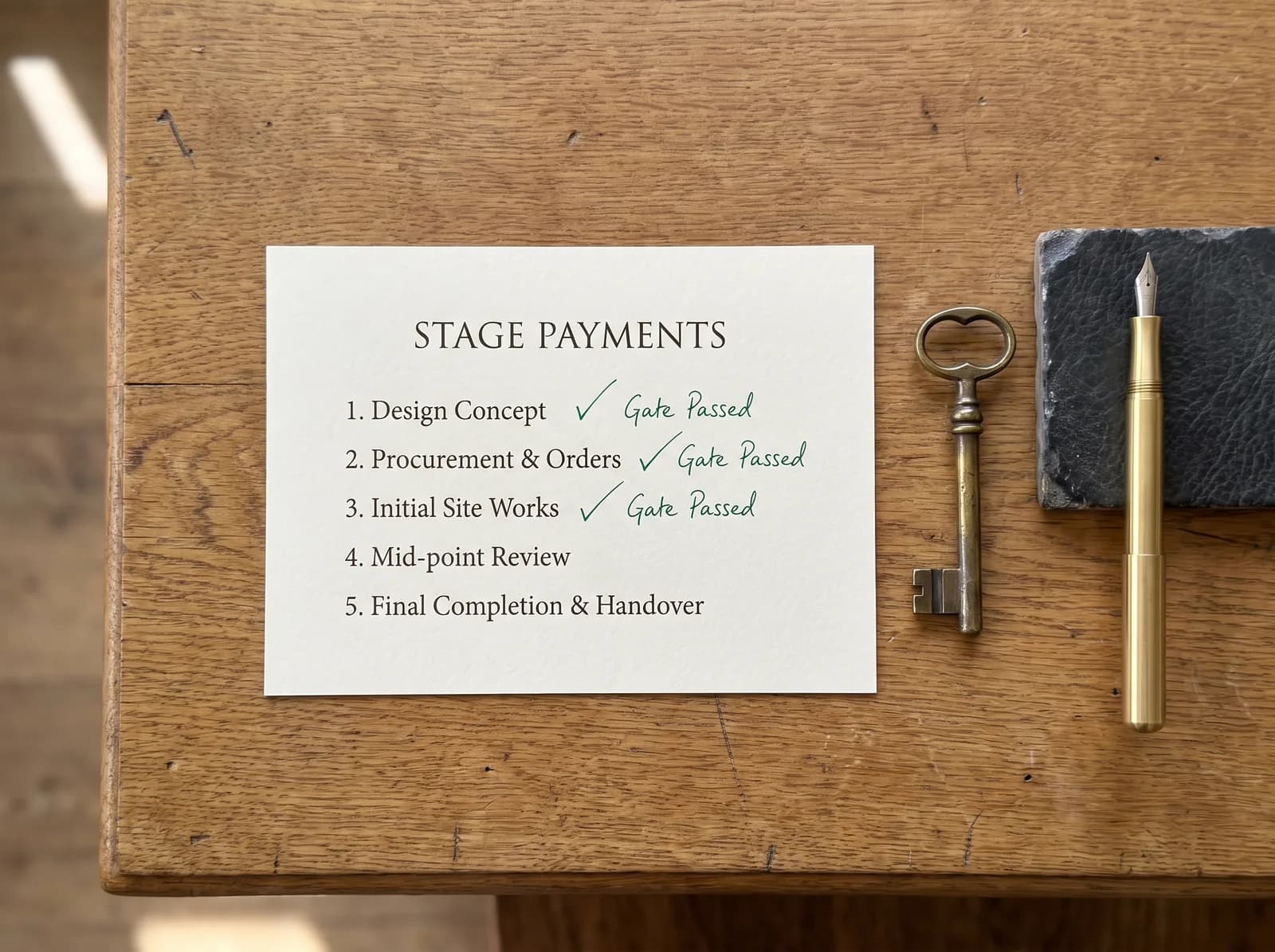
Payment should follow progress. A schedule that asks for fifty percent at signing and most of the rest before installation leaves you with no leverage at snagging, which is exactly when you need it. Look for stages that match visible milestones, a meaningful sum held until handover, and a clear rule for how variations are priced and approved before they are built.
Five stages, each unlocked by a gate passed on site. The key comes last.
Warranty, in writing, with a phone number
A quote that says nothing about what happens in year two is a quote for year one. Ask what is covered, for how long, and who answers the phone. The ÉLARA Standard puts ten years on joinery and modular furniture in writing at handover, alongside the brand warranty on each material and a service promise with response times. Whatever a studio offers, get it on the same paper as the price.
A short list to send back
If you are holding a quote right now, reply to the studio with these and see what comes back:
- The IS standard and brand of every board, per line.
- The make and series of every hinge, channel and mechanism.
- The laminate code, veneer species, lacquer type and stone lot.
- The full exclusions list, and allowances added for each.
- The payment schedule against milestones, and the variation rule.
- The warranty terms and who to call in year two.
A studio that answers all six cheerfully is one you can work with. If you want the longer version, the guide to choosing a designer in Bangalore has the eight questions we would ask before signing anything, and the six things worth walking away from. And if you would like a quotation written this way for your own home, the design that precedes it is free.
Photographs on the Journal are the studio's own visualisations of rooms as designed, captioned as such. Figures are indicative Bengaluru bands, dated in each post, never a quotation.