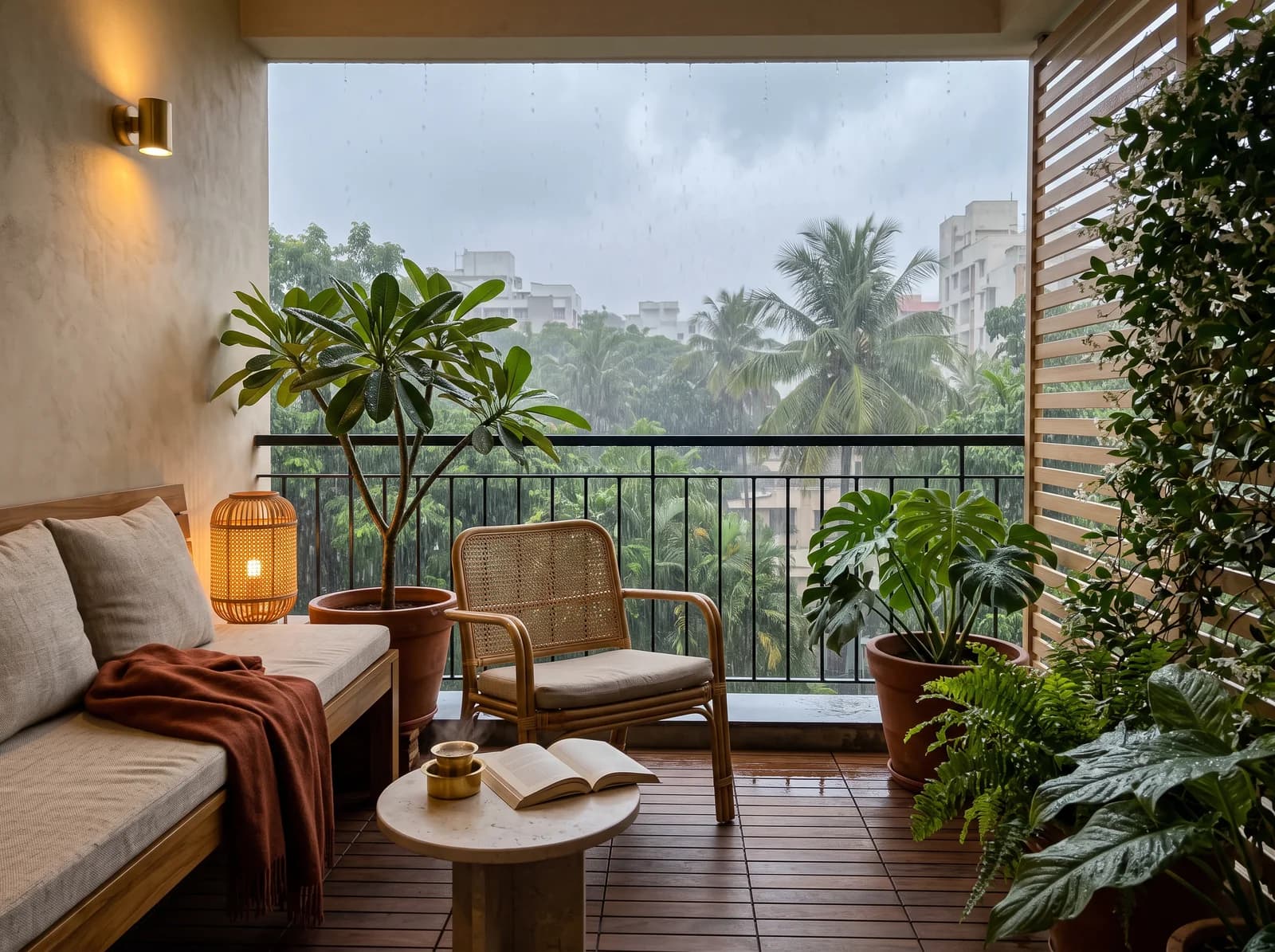
Interiors that survive a Bengaluru monsoon, and the ones that do not
Four months of rain, a year of humidity, termites underneath and hard water on top. Which materials come through it, which swell, warp and spot, and the lines in a quotation that decide the difference.
- Written by
- The Élara Studio
- Published
- Reading time
- 6 min read
Between June and September the city takes its rain sideways, and between October and May it stays humid enough that a towel does not dry overnight. Most of the interiors sold in Bengaluru were designed, in photographs, for a drier place. The ones that look good in year five were designed for this one.
What follows is what the weather does to a home, and what to build so that it does not. It is mostly about boards, walls, timber and water, which is to say it is mostly about the least glamorous lines on the quotation, which are the lines that matter.
What the monsoon actually does
- Swells board. Any board that takes water grows, and a shutter that grows does not close. Particle board dies in one leak; commercial ply in two.
- Lifts finishes. Veneer near steam bubbles, laminate edges lift where the water finds the glue, paint on a damp wall blooms and flakes.
- Feeds mould. Behind wardrobes on external walls, inside closed cupboards in the utility, under a mattress against a cold wall.
- Brings termites. Damp timber in contact with a wall or a floor is an invitation, and a kitchen skirting is the usual door.
- Spots everything. Hard water plus humidity leaves scale on glass, pits chrome, and etches polished stone.
- Floods balconies. A balcony without a slope and a working drain becomes a pond, and the pond finds the living room.

The board, by grade and by room
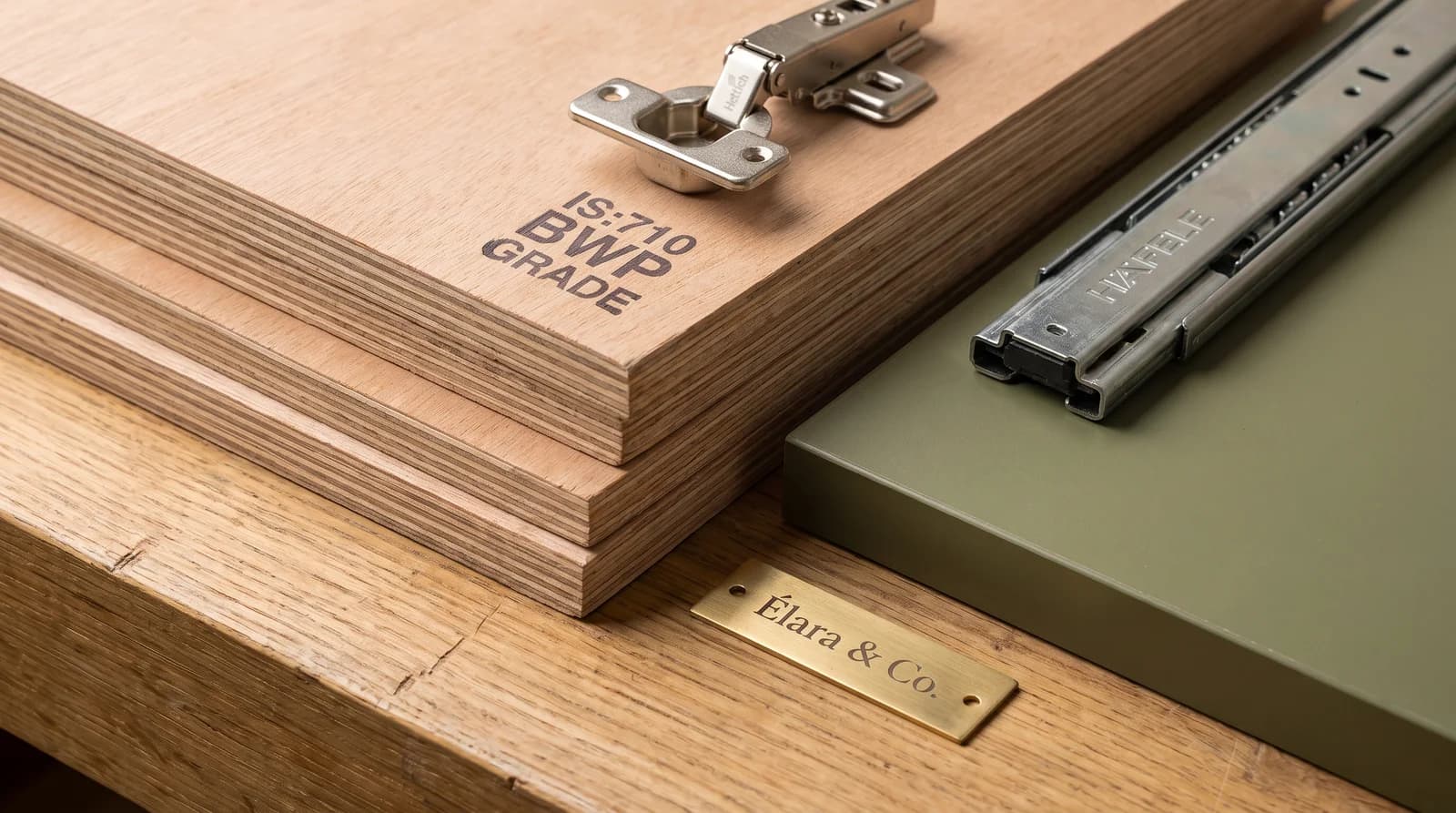
The one line that most decides whether a kitchen sees its tenth monsoon. IS:710 BWP, boiling water proof, for every carcass that water can reach: the kitchen, the utility, every bathroom vanity, the balcony store. IS:303 MR, moisture resistant, is honestly enough for a bedroom wardrobe on an internal wall, and a studio that says so is not cutting corners. What matters is that the grade is named on the quotation and stamped on the board when it arrives, because marine ply and waterproof are adjectives, and IS:710 is a standard.
IS:710 on the edge of the sheet. If the quotation does not say it, the kitchen will not have it.
Termites, and the gap that stops them
Termites arrive through the floor and the walls and eat from the inside, so the first anyone knows is a shutter that sounds hollow. The defences are simple and mostly about detailing. The building's anti-termite treatment, asked about at handover and topped up if it is overdue. A borate-treated or pre-treated ply, which most graded boards now are. And the detail that matters most: no timber in direct contact with a wet floor or an external wall. Kitchen carcasses on adjustable legs behind a removable skirting, so there is air underneath and the skirting can be pulled to look. Wardrobes on internal walls on a plinth, or with a ventilated back panel on external ones.
Finishes near steam and water
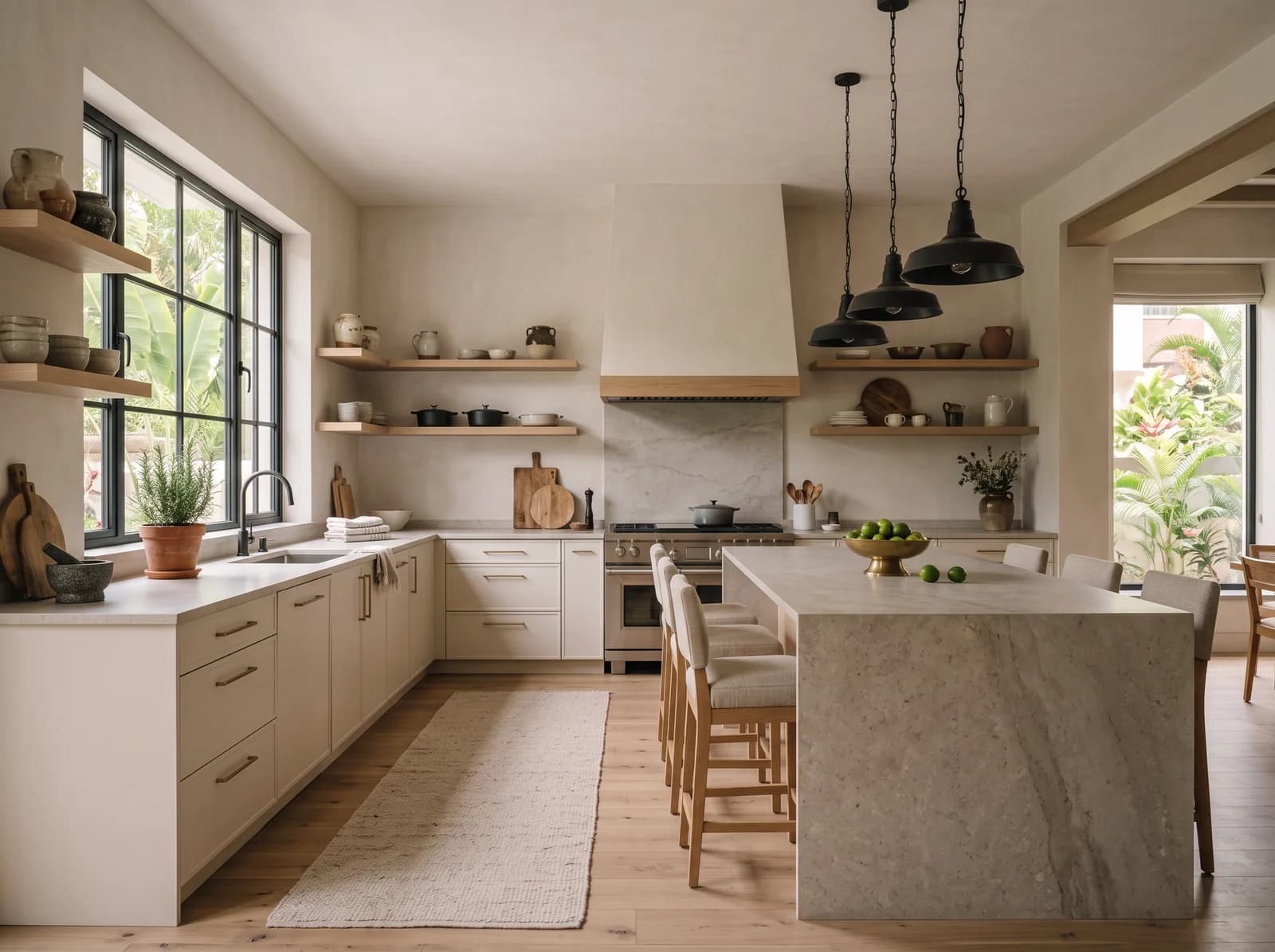
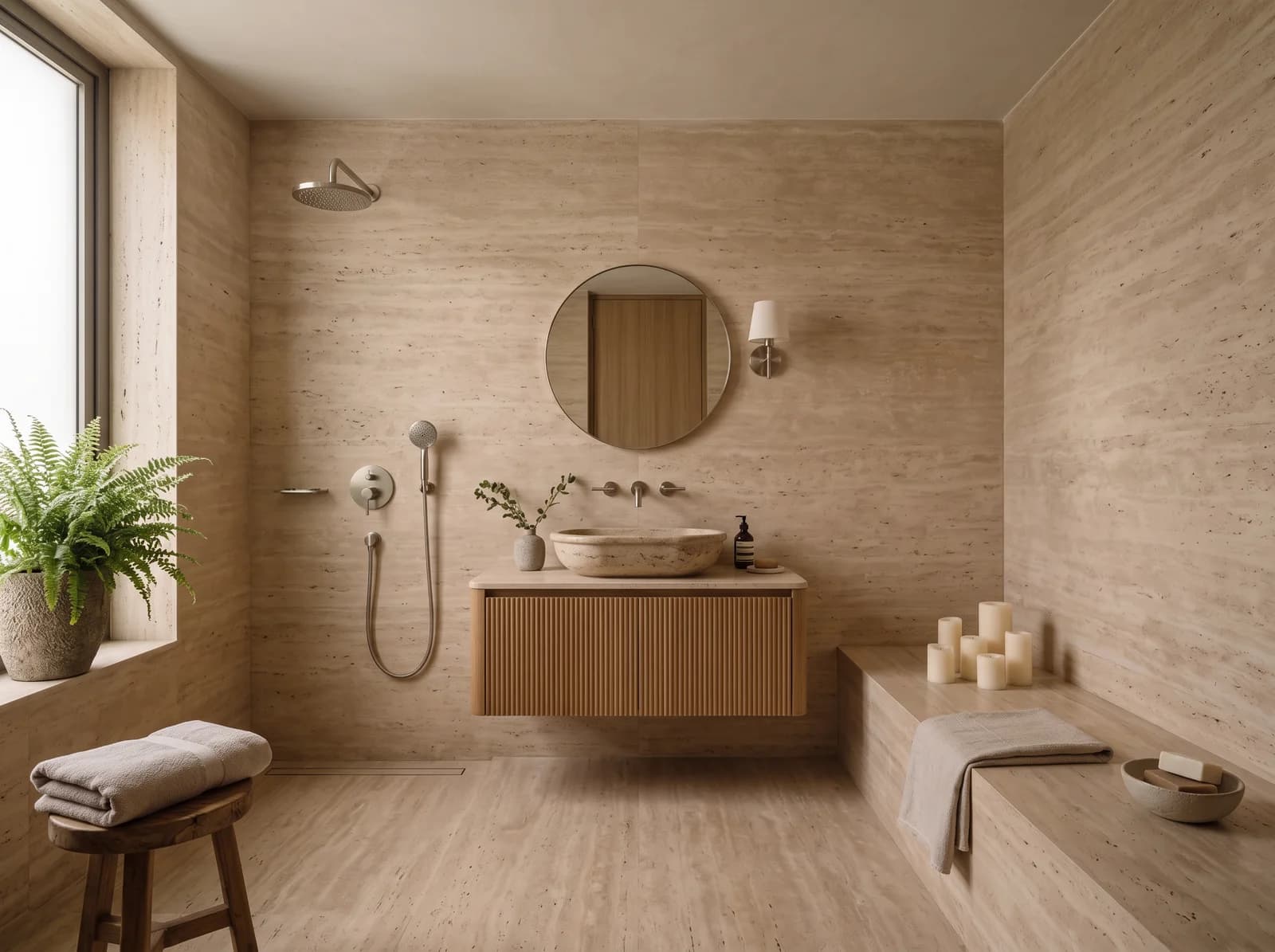
Around the hob, the sink and the dishwasher, and in every bathroom, the finish decision is about humidity before it is about looks. PU lacquer and a good laminate on HDHMR take steam for a decade. Natural veneer near a kettle will eventually tell you about it, so veneer and fluted timber go on the tall units and the island base, where they are touched and not cooked. Acrylic gloss is fine for water and terrible for fingerprints, which is a different note. In bathrooms, a floating vanity on BWP with a stone or solid-surface top is the whole answer; an oak-veneered one is beautiful for three years and then not.
Walls that breathe, and walls that do not
The damp patch that appears in October on the bedroom's external wall is water moving through masonry and meeting a paint that will not let it out. Lime plaster lets it out. It is the oldest answer to humidity in this country and still the best: the wall dries through its own surface, mould has nowhere to settle, and the plaster takes a mark without flaking. Where a wall must be painted, a breathable mineral paint beats a plastic emulsion. And wallpaper on an external wall in this city is a decision most people make once.
Terraces and balconies: slope first, deck second
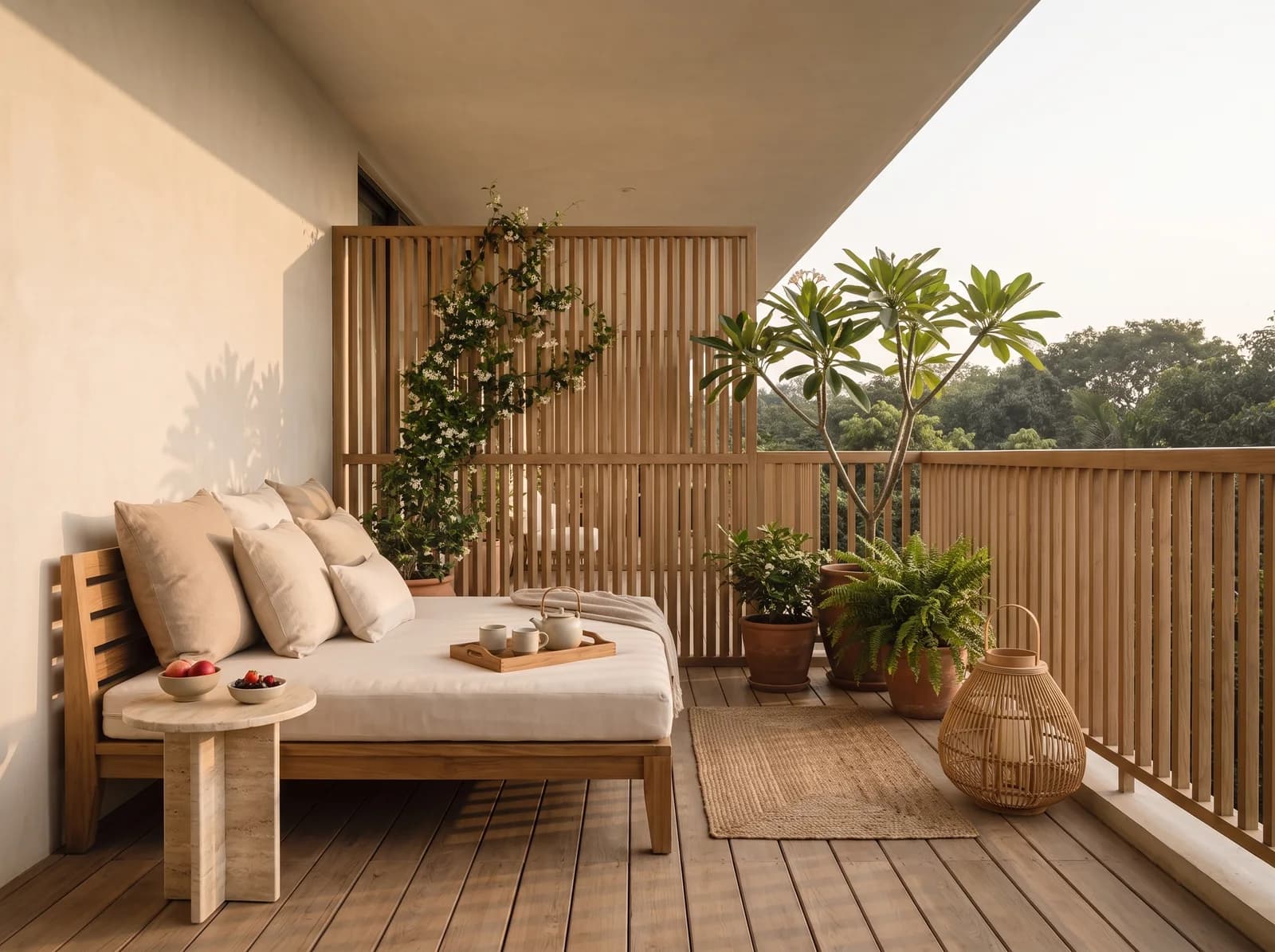
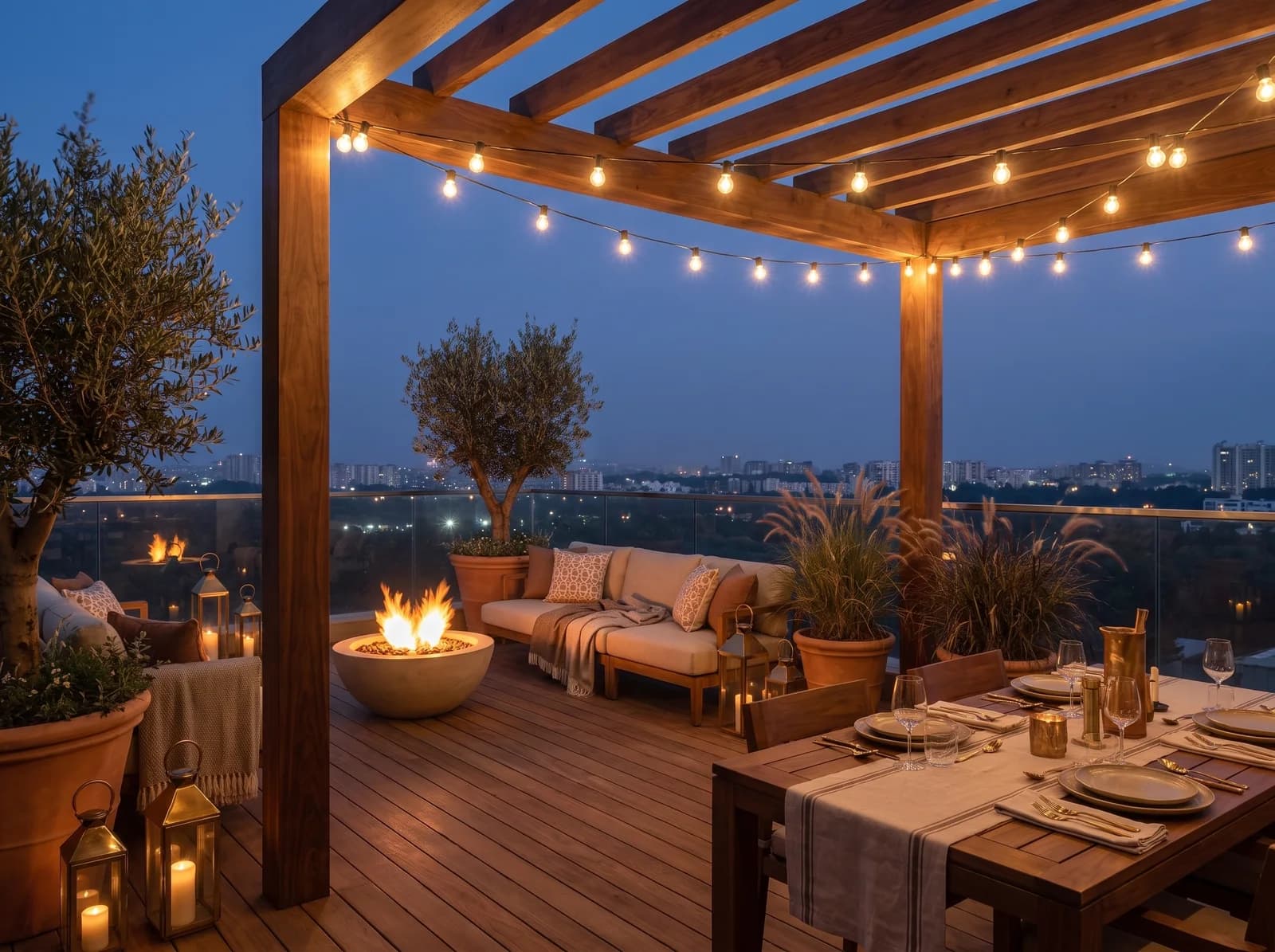
Every outdoor floor in a Bengaluru home needs a slope to a drain that works, tested with a bucket before anything is laid on it. Then a waterproofing membrane, photographed before it is covered and flood-tested for a day. Only then the teak deck tiles, on pedestals so water runs beneath them, the planting in pots with saucers, the furniture in teak or powder-coated aluminium with cushions that come inside or live in a bench. A pergola with a real roof over the part you sit in. Lighting on its own circuit, rated for rain. Do it in this order and the terrace is a room for eight months. Do it in any other order and it is a pond with furniture in it.
A terrace built in the right order: slope, membrane, deck on pedestals, then the pergola and the furniture. Studio visualisation.
Hardware and water
The city's borewell water is hard, and humidity carries it into every hinge. Stainless or zinc-alloy hinges and channels with a proper anti-corrosion finish, by make and series, last; unnamed hardware pits and stiffens within two monsoons. Taps in brushed nickel or PVD over plain chrome. Unlacquered brass, which we love in the kitchen and the living room, stays out of the daily shower. And a squeegee on a hook in every bathroom, which is the least expensive line in this note and does the most.
Living with it: the small habits
- Leave wardrobe doors on external walls ajar for an hour a week in the wet months, or fit a ventilated back panel and forget about it.
- Run the air-conditioning on dry mode for an hour in the evening in October; it pulls more water out of the flat than a dehumidifier.
- Pull the kitchen skirting once a year and look. It takes five minutes.
- Re-oil timber decks and outdoor teak before the rains, not after.
- Reseal any carved stone basin or honed stone counter yearly; keep polished marble out of wet rooms altogether.
The monsoon lines on the quotation
| Where | Specify | Because |
|---|---|---|
| Kitchen, utility, vanities | IS:710 BWP carcasses, legs behind a removable skirting | One leak, and the kitchen survives |
| Bedroom wardrobes | IS:303 MR, ventilated back on external walls | Honest grade, no mould behind |
| Shutters near steam | PU lacquer or laminate on HDHMR | Veneer bubbles near a kettle |
| Walls | Lime plaster or breathable mineral paint | The wall dries through its face |
| Terraces | Slope, membrane, flood test, deck on pedestals | A room, not a pond |
| Hardware | Named series with anti-corrosion finish | Two monsoons is all unnamed hinges get |
| Bathrooms | Floating vanity, matte stone, nickel or PVD | Nothing touches the wet floor; nothing spots |
If these seven lines are on the quotation with names and grades, the home is built for the city it is in.
If you are planning a home that will see its first monsoon next year, the time to get these lines right is now, before a board is ordered. Send us the floor plan; seven days on, you will have your rooms designed and a material board whose every item was chosen for the weather it will live in. The design is free.
Questions we get asked
- Which plywood is best for the monsoon in Bangalore?
- IS:710 BWP, boiling water proof, for every carcass water can reach: kitchen, utility, bathroom vanities and balcony stores. IS:303 MR is enough for bedroom wardrobes on internal walls. Insist the grade is named on the quotation and stamped on the board at delivery; 'marine ply' and 'waterproof' are adjectives, not standards.
- How do I stop damp patches on walls during the monsoon?
- Let the wall breathe. Lime plaster or a breathable mineral paint lets moisture moving through masonry dry out through the surface, where a plastic emulsion traps it and blooms. Avoid wallpaper on external walls, and give wardrobes on those walls a ventilated back panel.
- How do I protect wooden furniture from humidity and termites?
- Use treated, graded board; keep no timber in direct contact with a wet floor or an external wall; set kitchen carcasses on legs behind a removable skirting so there is air beneath and you can inspect; and check the building's anti-termite treatment at handover. Run the air-conditioning on dry mode for an hour in the evening during the wettest months.
Photographs on the Journal are the studio's own visualisations of rooms as designed, captioned as such. Figures are indicative Bengaluru bands, dated in each post, never a quotation.