The media wall without the fluting: a television wall that is still a room
The TV unit is the most searched piece of furniture in India and the one that most often ruins a living room. How to design the wall the screen lives on so that the screen is not the point of the room.
- Written by
- The Élara Studio
- Published
- Reading time
- 6 min read
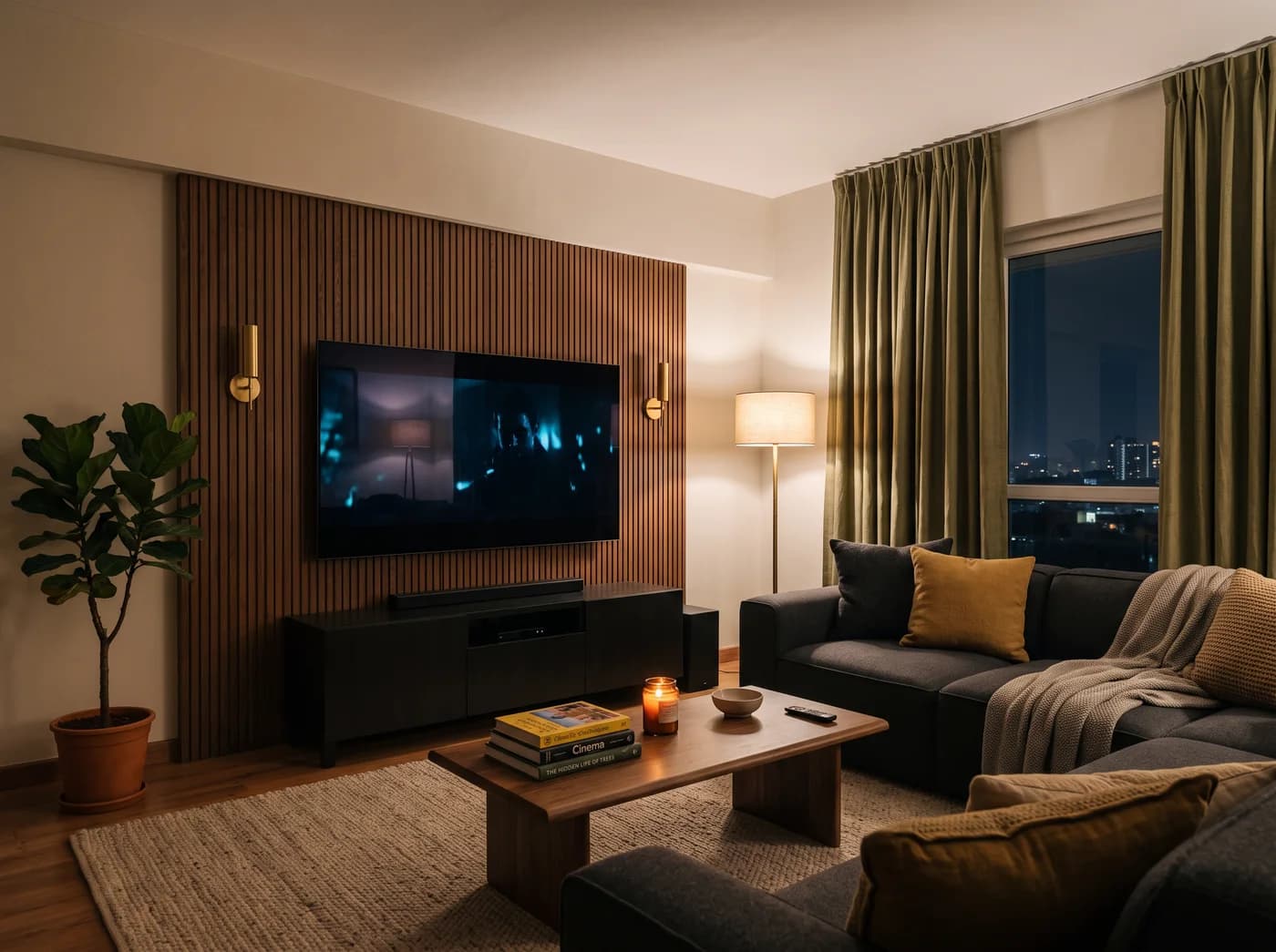
Type the words TV unit into any search box in India and you will see the same wall a thousand times: a black screen in the middle, fluted panels either side, a floating cabinet below with LED underneath, a row of open shelves with three objects on them. It is the most searched piece of furniture in the country, and it is the piece that most often turns a living room into a place for watching television.
Here is how we design that wall so the room stays a room. The screen is a black rectangle that is off for twenty hours a day. The wall it lives on should be beautiful for all twenty-four.
Start by deciding what the wall is
The best television walls are not television walls. They are a library, a plastered surface, a run of oak, a stone chimney breast, a wall of cabinets that happen to have a screen in them. The screen is placed on the wall the way a painting would be, and the wall is designed as if the screen were not there. Then it is switched on, and it is fine, and then it is switched off, and the room is still good.
- 20 hrs
- A day the screen is off. Design for those
- 1
- Material on the wall, at most two
- 0
- Open shelves with three objects on them

The single material wall
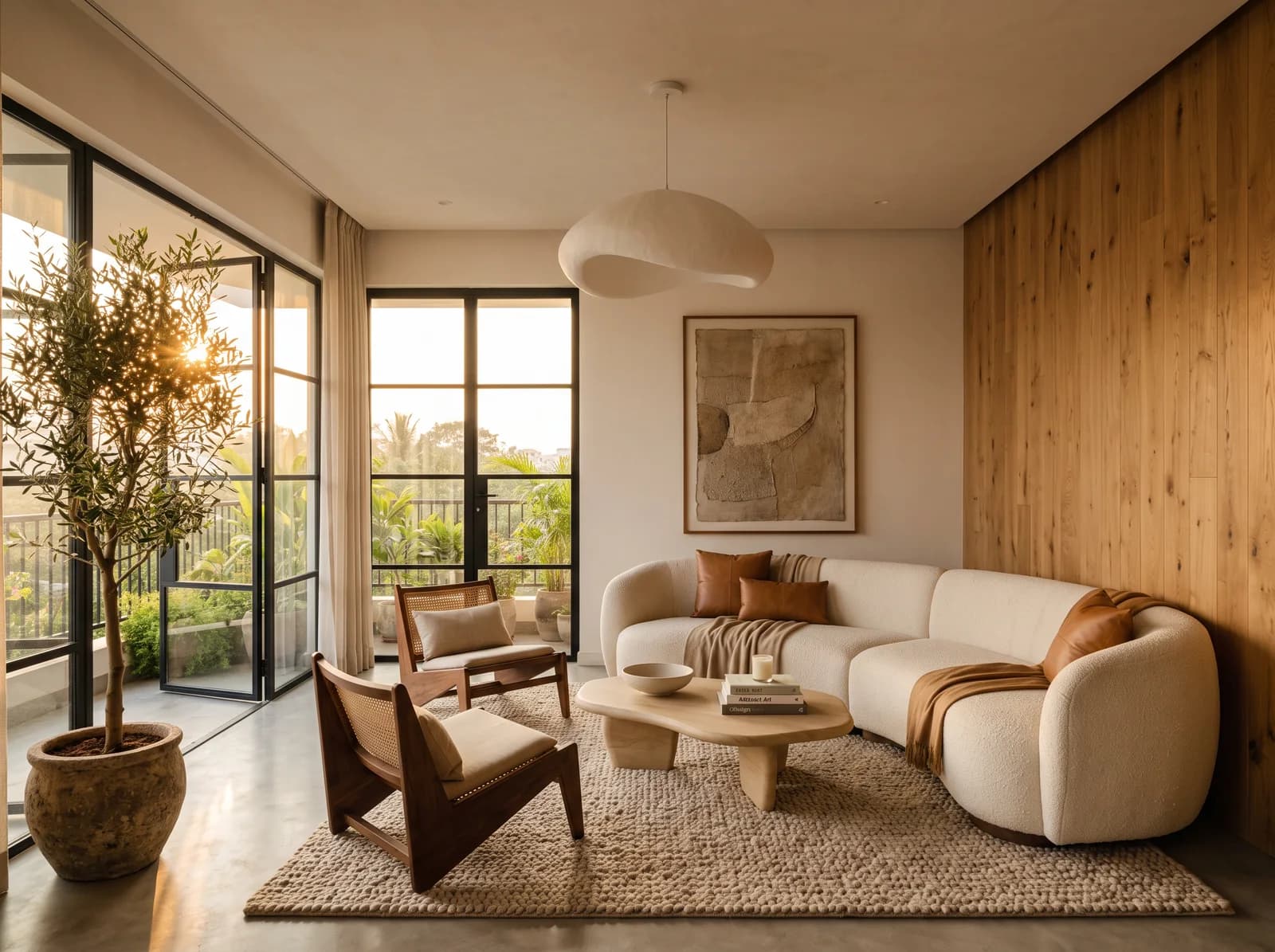
The simplest and the most expensive-looking. One material, bookmatched oak, lime plaster, a honed stone or a fabric panel, across the whole wall from floor to ceiling, with the screen mounted flush on it and the cables inside. No cabinet below if the room can spare one; a low bench in the same material if it cannot. The Golden Hour Apartment's living room is this: bookmatched oak, one pendant, and the screen reads as a dark panel in a wall of grain.
The Golden Hour Apartment: one wall of bookmatched oak, the screen a quiet rectangle in it. Studio visualisation.
The library wall
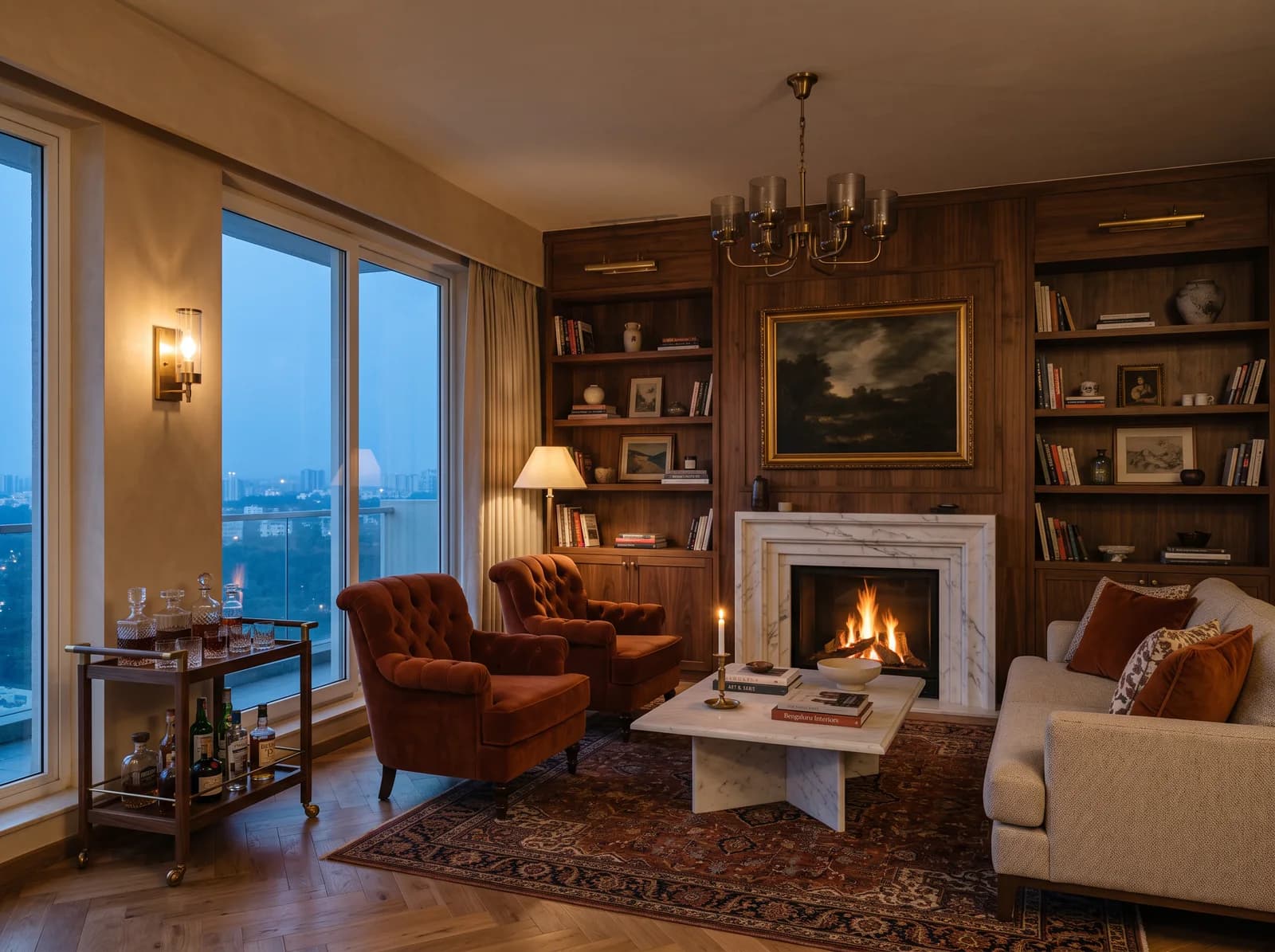
Shelves floor to ceiling, full of books that are actually read, with the screen set into a recess among them or on a panel that sits forward of them. Books are the best acoustic treatment a room can have, they age with the family, and a screen surrounded by them looks like one object among many rather than the altar of the room. The Evening Penthouse has a walnut library wall with the fireplace at its centre; the screen sits in the adjoining media lounge, and the living room is for people.
The Evening Penthouse: a walnut library wall, a fireplace, lamps. The screen lives in the next room. Studio visualisation.
Where the screen should be, and how big
The centre of the screen at seated eye height, roughly a metre from the floor, not the height of a cinema. The size chosen by the distance to the sofa: sit three metres away and a fifty-five-inch screen is right; sixty-five looks enormous in the showroom and correct in a room with a four-metre throw. Never above a fireplace, where the neck aches and the heat shortens the panel's life. Not opposite the window, where the afternoon glare makes it a mirror. If the room's geometry insists on the window wall, a sheer and a good blind solve it; a bigger, brighter screen does not.
Where the boxes go
The set-top box, the console, the soundbar, the router and their cables are why most media walls have a cabinet, and the cabinet is why most media walls look like furniture showrooms. Three better answers. A slim recess behind the screen, with a shelf and ventilation, so the boxes sit invisible behind the panel and the remotes work through an infrared repeater. A cabinet across the room, or in the next one, with an HDMI run in conduit. Or, if a cabinet must be under the screen, one that is closed, low, the full width of the wall, in the same material as the wall, with the speaker behind fabric. Never an open shelf with a black box on it.
The fluting question
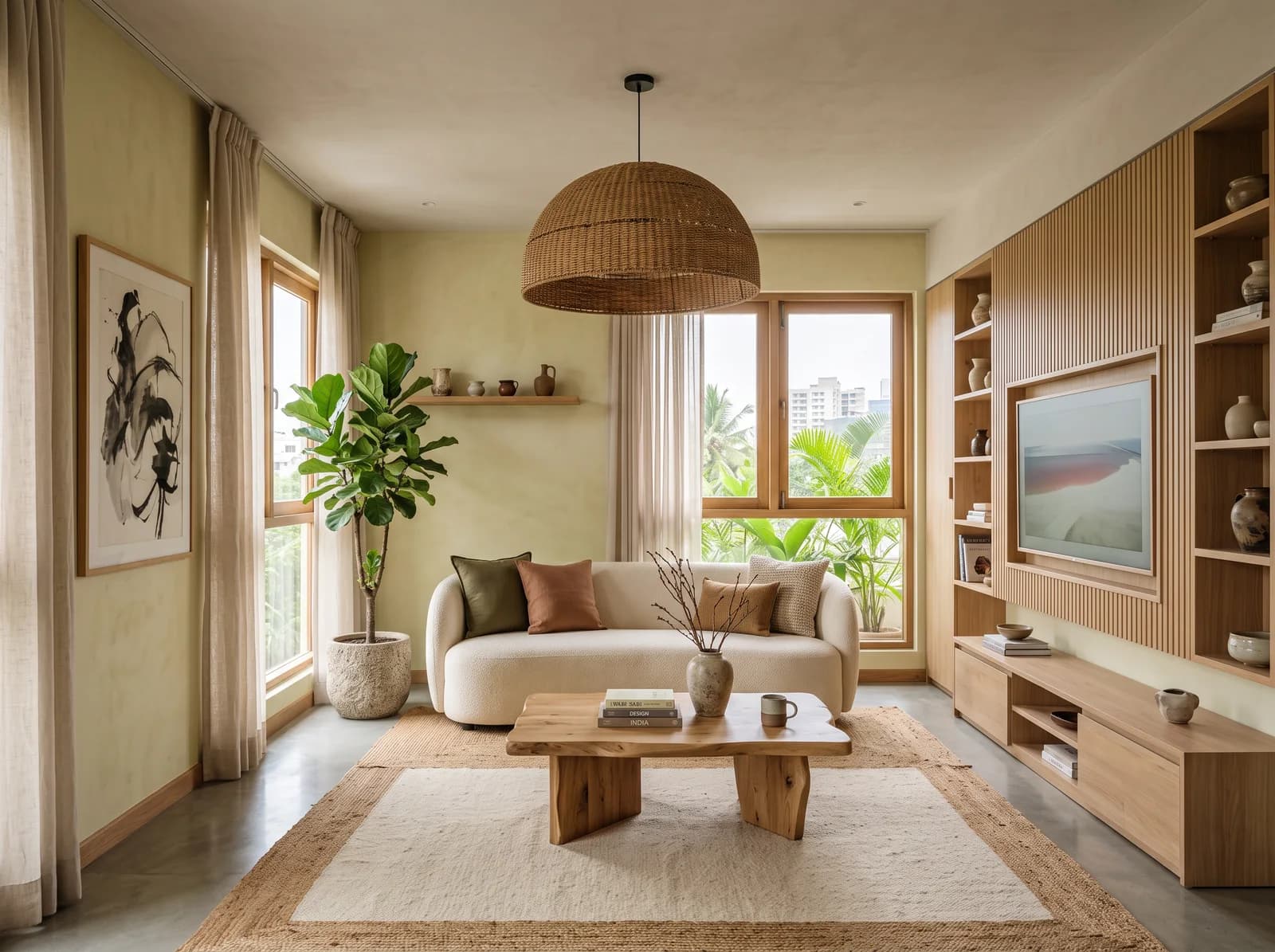
Fluted panels either side of the screen are the most-copied detail of the decade, and they are not wrong. They do two jobs well: they soften the sound of the room, and they give a long wall a rhythm the eye can rest on. They are wrong when they are the only idea, repeated on every wall of the house, in a laminate that pretends to be oak. Our rule, from the trends note: one fluted surface per room at most, in real timber, doing a job. On a media wall it can be the whole wall, as in the Sunlit Japandi Home, or none of it.
Light around the screen
The strip of LED under a floating cabinet was the signature of the last decade's TV unit, and it should retire. What the eye actually wants when watching a screen at night is a low, warm light behind or beside it, so the room is not black around a bright rectangle: a pair of wall lights either side at 2700 Kelvin, or a soft wash from a cove above, on a dimmer, on the film scene. A lamp on the far side of the room so the room still has depth. And never a colour-changing strip, which makes every film look like a nightclub.
Or give the screen its own room
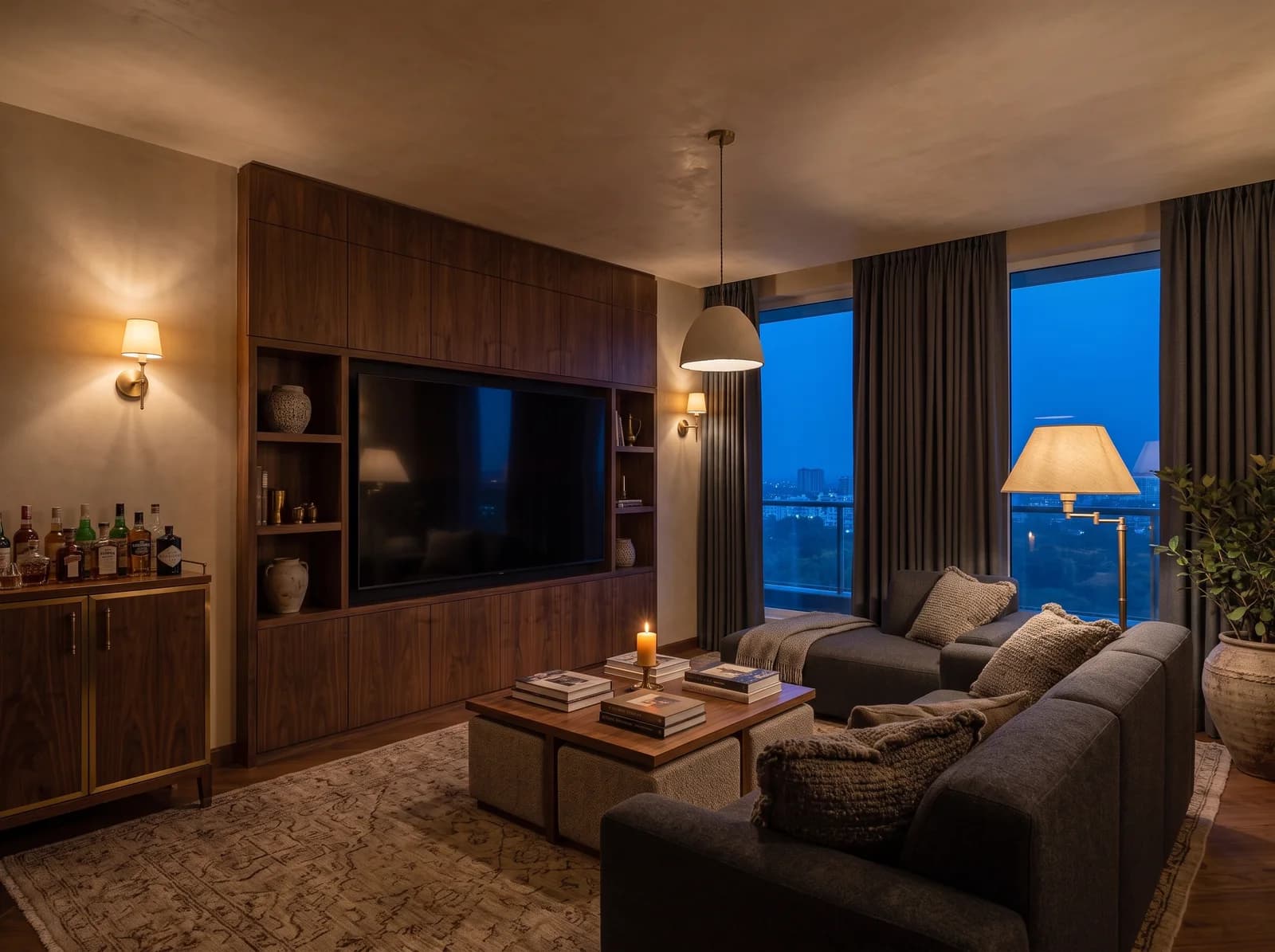
The most radical answer to the television wall, and the one more of our clients choose every year, is not to have one in the living room at all. A media den: a smaller room, drenched dark, with a deep sofa, the screen set into fluted timber for the acoustics, brass wall lights for the film scene and a door that closes. The living room becomes a room for people, with a library wall or a fireplace where the screen would have been. The Plaster & Light Media Den in the boutique is exactly this room.
The Plaster & Light Media Den: the screen in a room built for it, so the living room does not have to be. Studio visualisation.
Which wall for which room
| Wall | Best for | Boxes go | Light |
|---|---|---|---|
| Single material | Rooms that want to be calm | Recess behind the screen | Wall lights either side |
| Library | Readers, older flats with height | Behind a panel among the shelves | Lamps and a cove |
| Closed cabinet wall | Families with a lot to store | Inside, behind fabric doors | Cove above, no strip below |
| The media den | Homes with a room to spare | In the den, invisible | Brass wall lights, film scene |
None of the four has an open shelf with three objects on it.
If the wall your screen lives on is the wall you like least, send us a photograph of it and the floor plan. The living room comes back in seven days, designed as a room first and a place to watch television second, with the wall drawn in the material that suits your home and the cables already inside it, free.
Questions we get asked
- What is the best TV unit design for a living room in 2026?
- One that does not read as a TV unit: a single-material wall in oak, plaster or stone with the screen mounted flush and the boxes in a recess behind it, or a full library wall with the screen set among the shelves. Closed storage in the wall's own material if storage is needed, wall lights either side at 2700 Kelvin, and no open shelves or LED strip below.
- At what height should a TV be mounted?
- With the centre of the screen at seated eye height, about a metre from the floor. Size it to the distance from the sofa: fifty-five inches at three metres, sixty-five at four. Avoid mounting above a fireplace or opposite a window.
- Are fluted TV panels going out of style?
- They are at their peak, which is the moment to use them carefully. In real timber, doing an acoustic job, on one wall of a room, they still look right. In laminate, repeated on every wall of the house, they date the home quickly. One fluted surface per room at most.
- How do I hide the set-top box and cables on a TV wall?
- A ventilated recess behind the screen with an infrared repeater for the remotes, a cabinet across the room with HDMI run in conduit, or a closed full-width cabinet in the wall's material with speakers behind fabric. All conduit is run before the wall is plastered.
Photographs on the Journal are the studio's own visualisations of rooms as designed, captioned as such. Figures are indicative Bengaluru bands, dated in each post, never a quotation.