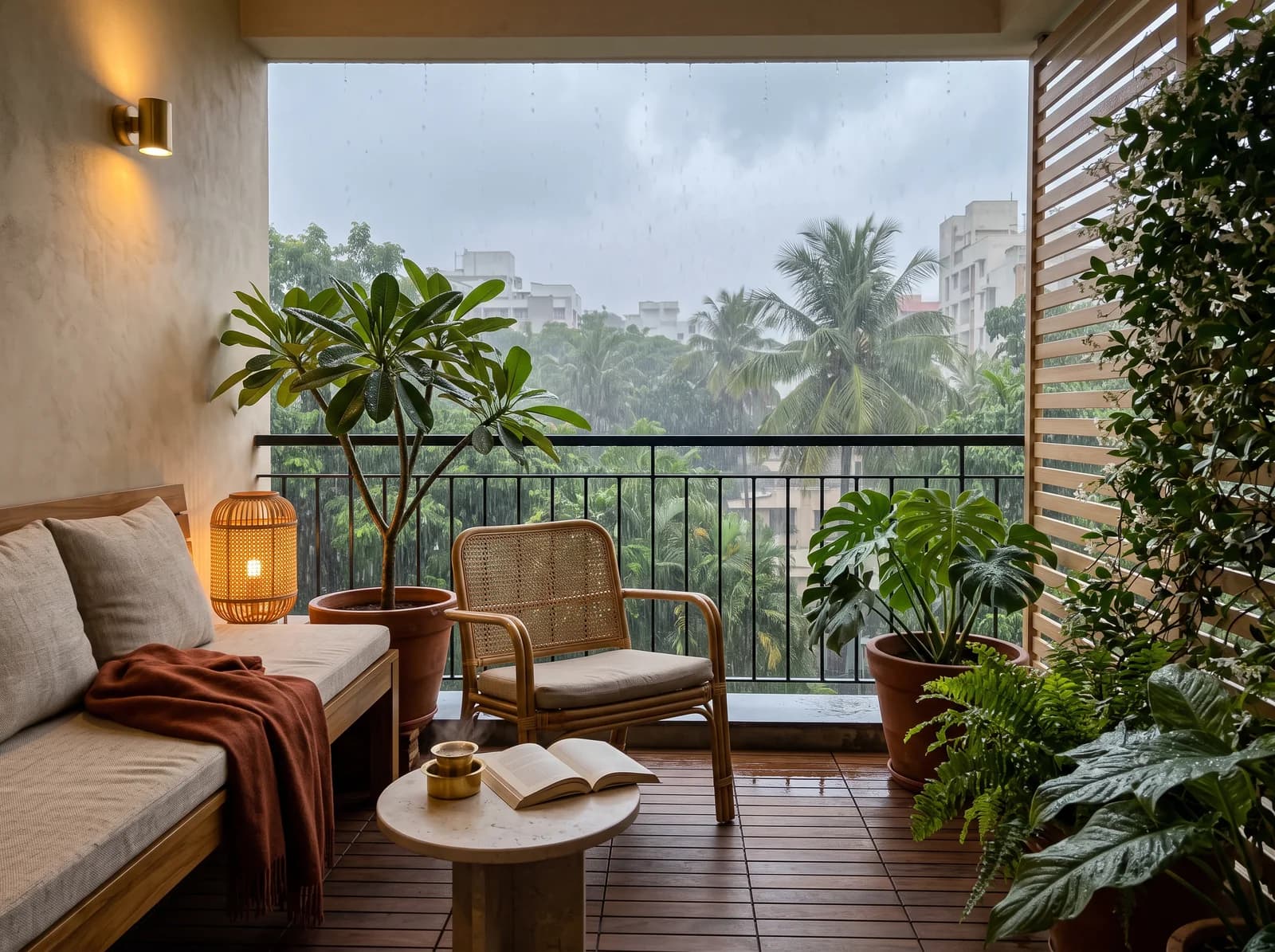
Biophilic design is not a plant in the corner
The fastest-rising search in Indian interiors is also the most misunderstood. What bringing the outside in actually means in a Bengaluru flat, which plants survive air-conditioning, and where the light has to come from first.
- Written by
- The Élara Studio
- Published
- Reading time
- 6 min read
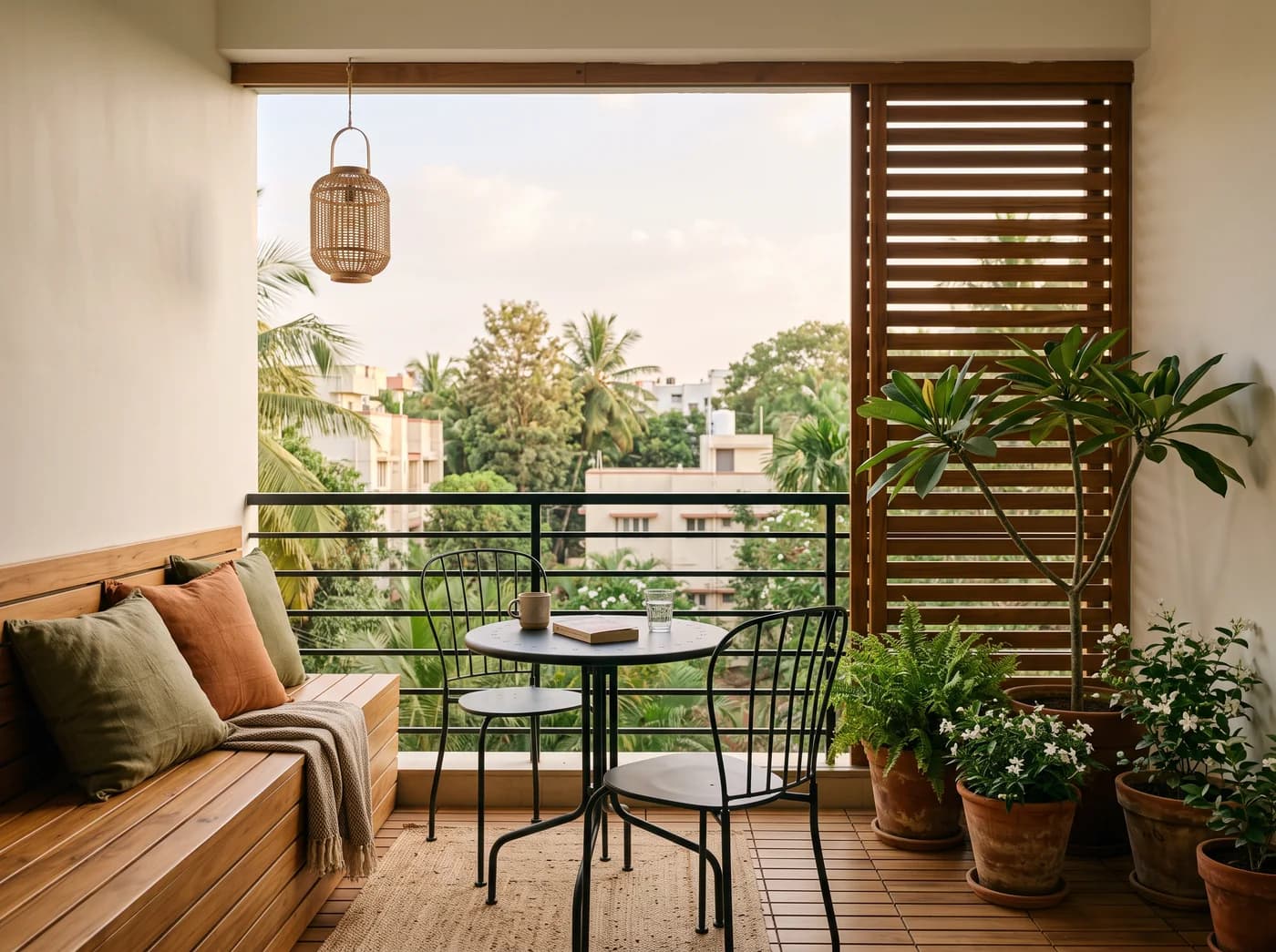
Bengaluru was the garden city before it was anything else, and the homes people are asking us for in 2026 are trying to remember that. The word on the brief is biophilic. The photograph attached is usually a wall of plants in a café. The two have very little to do with each other.
Biophilic design is the idea that people are calmer, sleep better and think more clearly in rooms that behave a little like the outdoors: daylight that changes across the day, air that moves, materials that came from the ground, a view of something growing. Plants are the last and smallest part of it. This is how we do the rest, in a flat, in this city.
Light first, because nothing lives without it
The single most biophilic decision in a home is the one about the windows: what covers them, what sits in front of them, and how far the light is allowed to travel. Heavy blackout drapes pulled to the frame, a sofa with its back to the glass and a tall cabinet beside the window are how most flats kill their own daylight. Sheer linen that moves in the breeze, furniture kept low near the glass, a mirror on the wall opposite to carry the window deeper into the room, and pale surfaces near the light so it bounces: these cost less than a green wall and do more.

Let the light do the decorating
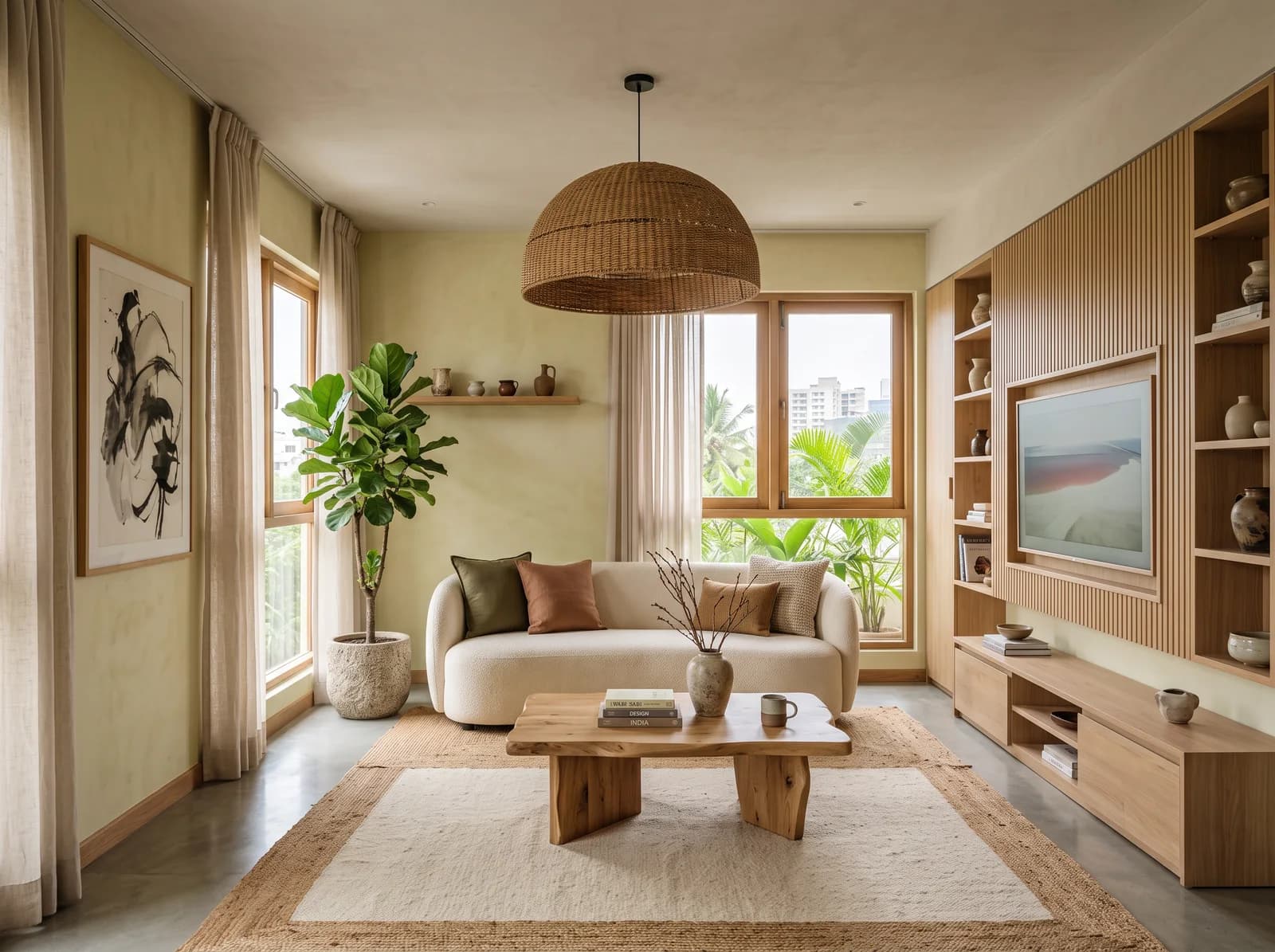
In the Sunlit Japandi Home the whole design is a device for morning light: sheer linen at the window, a pale floor and pale walls to bounce it, oak that warms as the sun crosses it, and one fiddle-leaf fig standing where the light lands longest. Nothing in the room is green except the plant, and the room feels like a garden.
One plant, one window, and everything in the room arranged to let the light in. Studio visualisation.
Materials that came from somewhere
The second layer is what the room is made of. A hand recognises wood, stone, clay, linen and wool, and it recognises laminate, gloss and polyester too, even when the eye is fooled. Rooms built of the first set feel calm in a way that is hard to name and easy to measure in how long guests stay. Lime plaster that breathes. Timber with visible grain. A stone floor that is cool underfoot in April. Cane, jute and rattan where a synthetic would have been. These are the materials of the quiet luxury note, and they are biophilic before a single plant arrives.



The balcony is the garden. Treat it like one
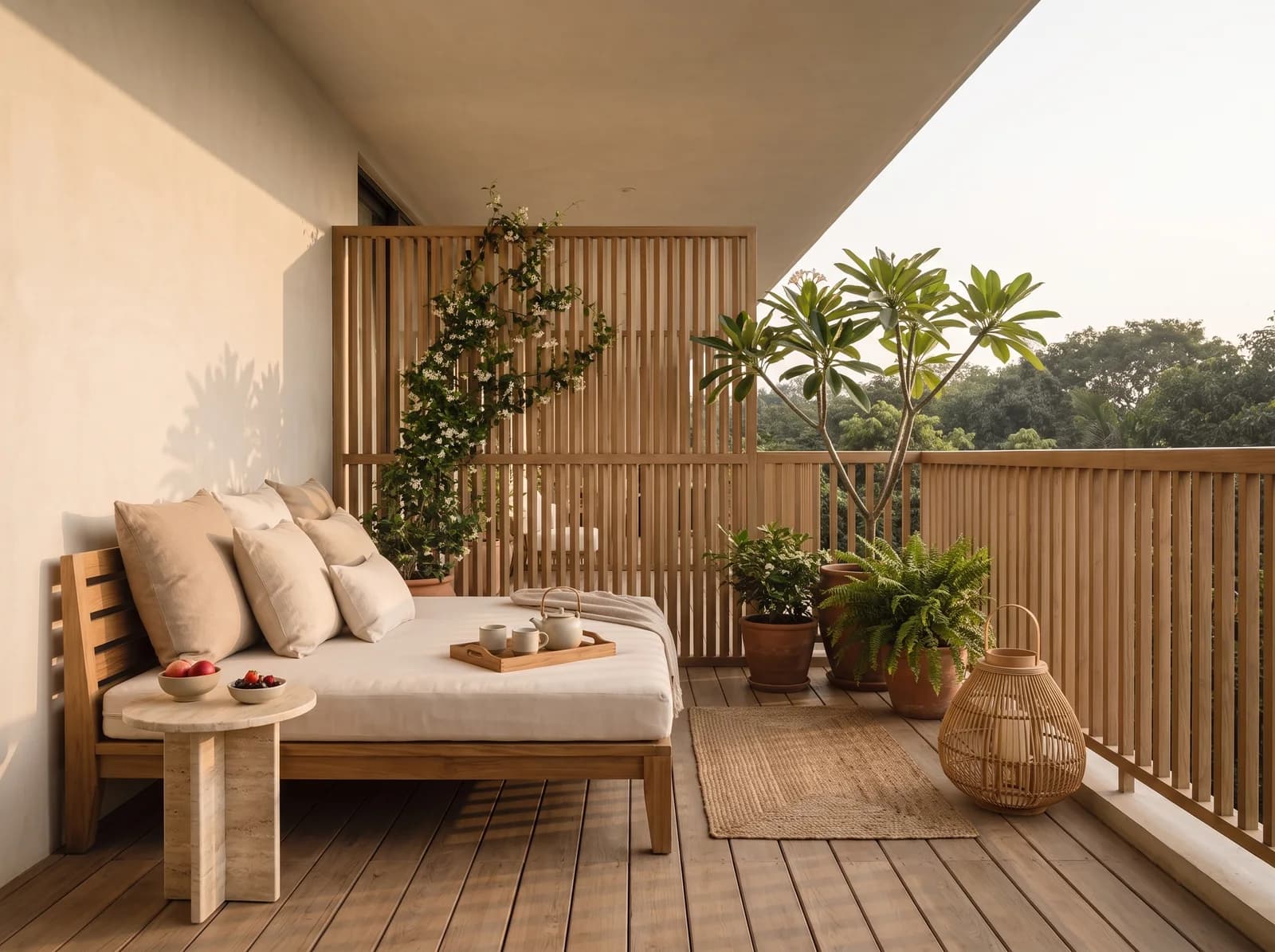
Almost every Bengaluru flat has a balcony and almost every balcony is a place for the washing machine and a drying rack. It is the most wasted room in the city. Given teak deck tiles over the builder's tile, a built-in bench with weatherproof cushions, planting in large terracotta pots rather than a dozen small ones, a slatted screen for privacy and a climber on it, and lighting on its own switch, a six-foot balcony becomes the room the family uses most between October and March. The washing machine goes in the utility or behind a louvred door at one end.
Plants that actually live in a Bengaluru flat
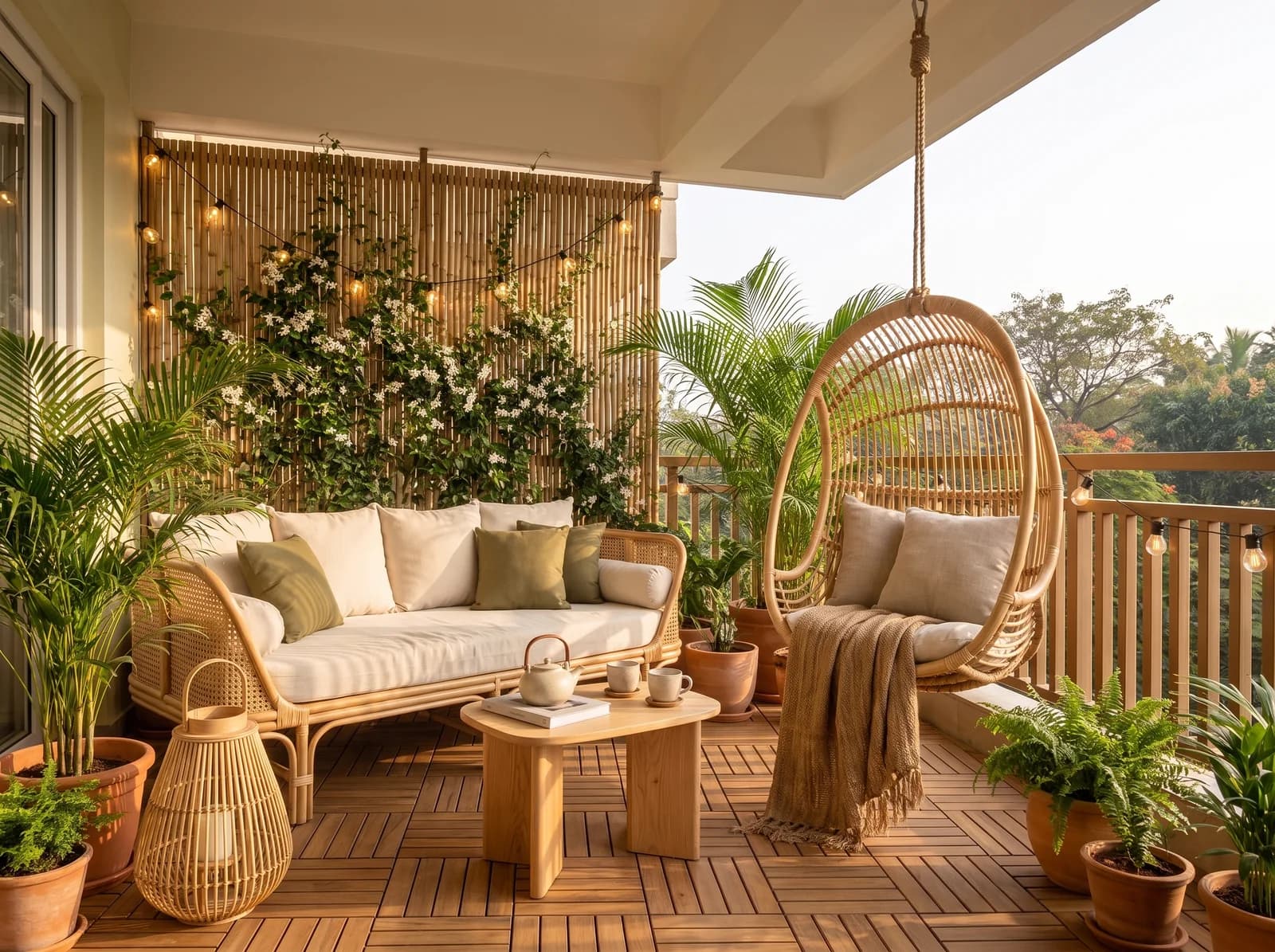
The café green wall dies in a home within a year, because a home has air-conditioning, closed windows for half the day and nobody employed to mist it. What survives is fewer, larger plants, chosen for the light they will actually get, in pots big enough that they do not dry out between Sunday waterings. Our short list, from experience in client homes rather than a nursery catalogue:
- For the bright window: a fiddle-leaf fig or a rubber plant, one, in a pot at least eighteen inches across. They want the light and they reward it.
- For the corner two metres from the glass: an areca palm or a bird of paradise, both forgiving of a Bengaluru living room's half-light.
- For the bedroom: a snake plant or a ZZ plant. They tolerate the air-conditioning, the dark and the neglect, and they are the plants people forget to kill.
- For the balcony: jasmine or star jasmine on the screen, a money plant trailing from height, curry leaf and tulsi in the sun for the kitchen, and one olive or frangipani in a large pot as the tree.
- Avoid: the wall of pothos on a felt panel, succulents indoors, anything sold as a set of twelve.
One tree, not twelve pots
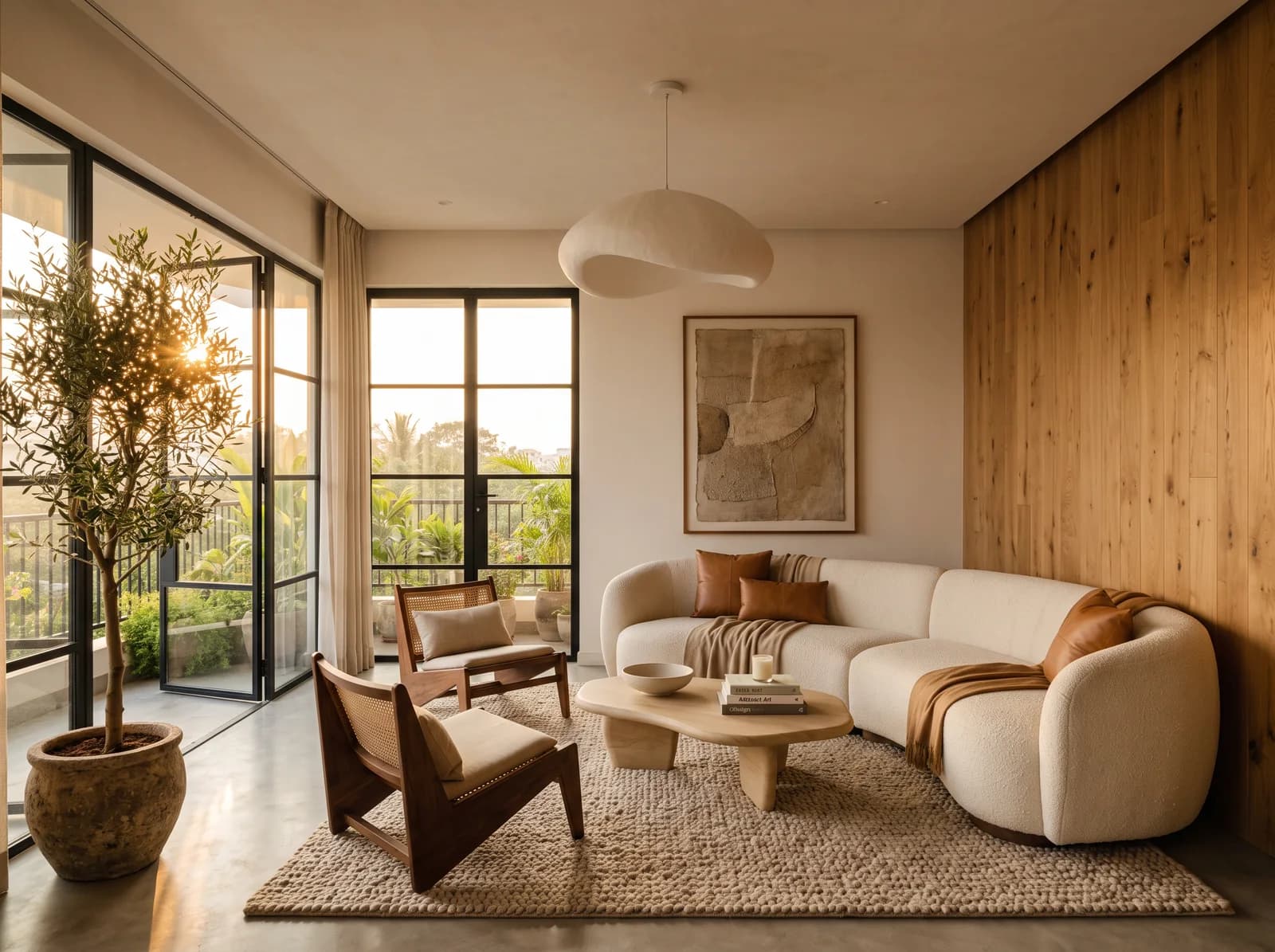
The most effective plant in a room is one that reads as a tree: an olive, a ficus, a tall palm, in a pot that is a piece of furniture in its own right. It gives the room a vertical, it moves slightly in the air from the window, and it does what a shelf of small pots never can, which is make the room feel inhabited by something alive. The Golden Hour Apartment has exactly one, standing where the evening light arrives.
An olive tree in a terracotta pot, placed where the light lands last. Studio visualisation.
Air, water, and the sounds of a room
The parts of biophilic design nobody photographs. Cross-ventilation planned so that with two windows open the air moves through the flat, which in Bengaluru's climate is most of the year. A ceiling fan in every room, slow and silent, because moving air is how the body knows it is not in a box. A small water feature on the balcony if the family likes the sound, and no fountain indoors, ever. Curtains and rugs that soften the hard acoustics of a tiled flat so the room stops echoing like a lobby.
The biophilic flat, in order of what matters
- 01Uncover the windows: sheer linen, low furniture near the glass, pale surfaces nearby, a mirror opposite.
- 02Build in natural materials: plaster, timber, stone, cane, linen, wool.
- 03Turn the balcony into a room: deck, bench, large pots, screen, light.
- 04Plan the air: cross-ventilation, a fan in every room, soft surfaces for the acoustics.
- 05Then the plants: few, large, chosen for the light, one that reads as a tree.
If your flat has a window it is not using and a balcony full of laundry, that is a biophilic home waiting to happen. Send us the floor plan and a photograph from each window; seven days later you will see the rooms with the light let in, the balcony as a garden and the planting placed. It is complimentary.
Questions we get asked
- What is biophilic interior design?
- Designing a home to behave a little like the outdoors: daylight that changes across the day, moving air, natural materials such as timber, stone, plaster and linen, and a view of something growing. Plants are the last and smallest part of it; light and materials come first.
- Which indoor plants survive in an air-conditioned Bangalore flat?
- Snake plant and ZZ plant in bedrooms, areca palm or bird of paradise in living-room corners, and a fiddle-leaf fig or rubber plant at a bright window. Use fewer, larger plants in big pots rather than many small ones, and avoid indoor green walls, which rarely survive a year in a home.
- How do I make a small balcony feel like a garden?
- Teak deck tiles over the builder's floor, a built-in bench with weatherproof cushions, three or four large terracotta pots rather than a dozen small ones, a slatted screen with a climber such as jasmine, and lighting on its own switch. Move the washing machine to the utility or behind a louvred door.
Photographs on the Journal are the studio's own visualisations of rooms as designed, captioned as such. Figures are indicative Bengaluru bands, dated in each post, never a quotation.