The pooja room deserves to be a room
Not a niche in the passage, not a cabinet beside the television. How we design the pooja space in an apartment so it has presence, follows Vastu, survives the lamp and the incense, and speaks the same language as the rest of the home.
- Written by
- The Élara Studio
- Published
- Reading time
- 6 min read
There are more searches in India for pooja room designs than for living rooms, and the results are almost all the same object: a laminate cabinet with a CNC-cut jaali door, a strip of LED, and a bell. It is the most important corner of many homes, and it is the one most often bought off a shelf.
We think the pooja space deserves the same care as the primary bedroom, and usually more. This is how we design it in an apartment, where there is rarely a spare room and often a bathroom in exactly the wrong corner.
First, the place
By tradition and by Vastu the pooja room belongs in the north-east, the corner that takes the first light of the morning, and the person praying faces east or west. In a well-planned flat there is a niche or a small room there; in many there is a bathroom, and the answer is the next best corner, north or east, given enough presence that its placement is not the first thing anyone notices. The Vastu note covers the compromises in detail. What matters more than the compass is what follows: a threshold, a plinth, light, and a door.
- NE
- The corner that takes the first light
- 3
- Things a builder never provides: a door, extraction, dimmable light
- 1
- Material language, shared with the rest of the home
Three sizes of pooja space, honestly

The room
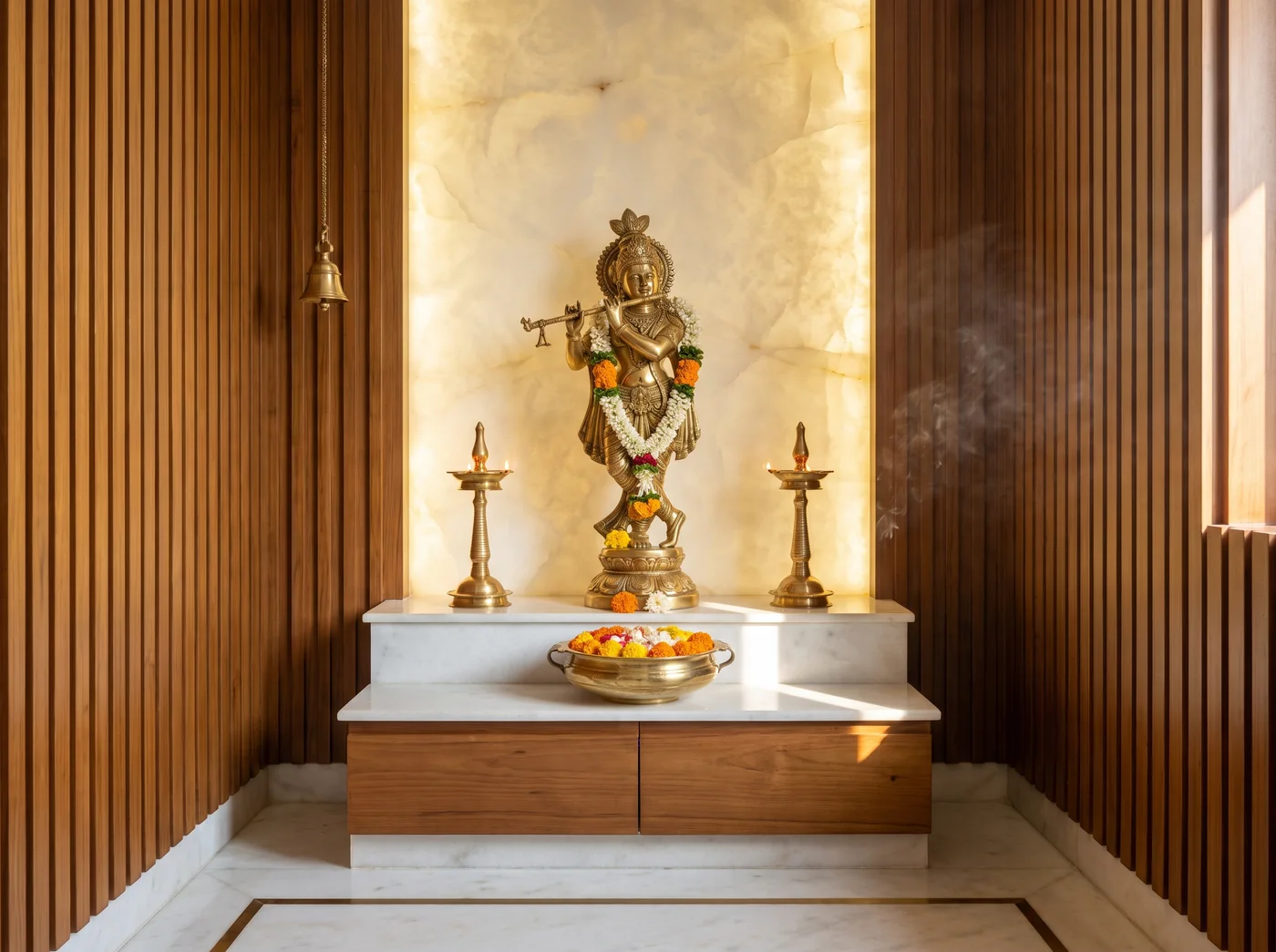
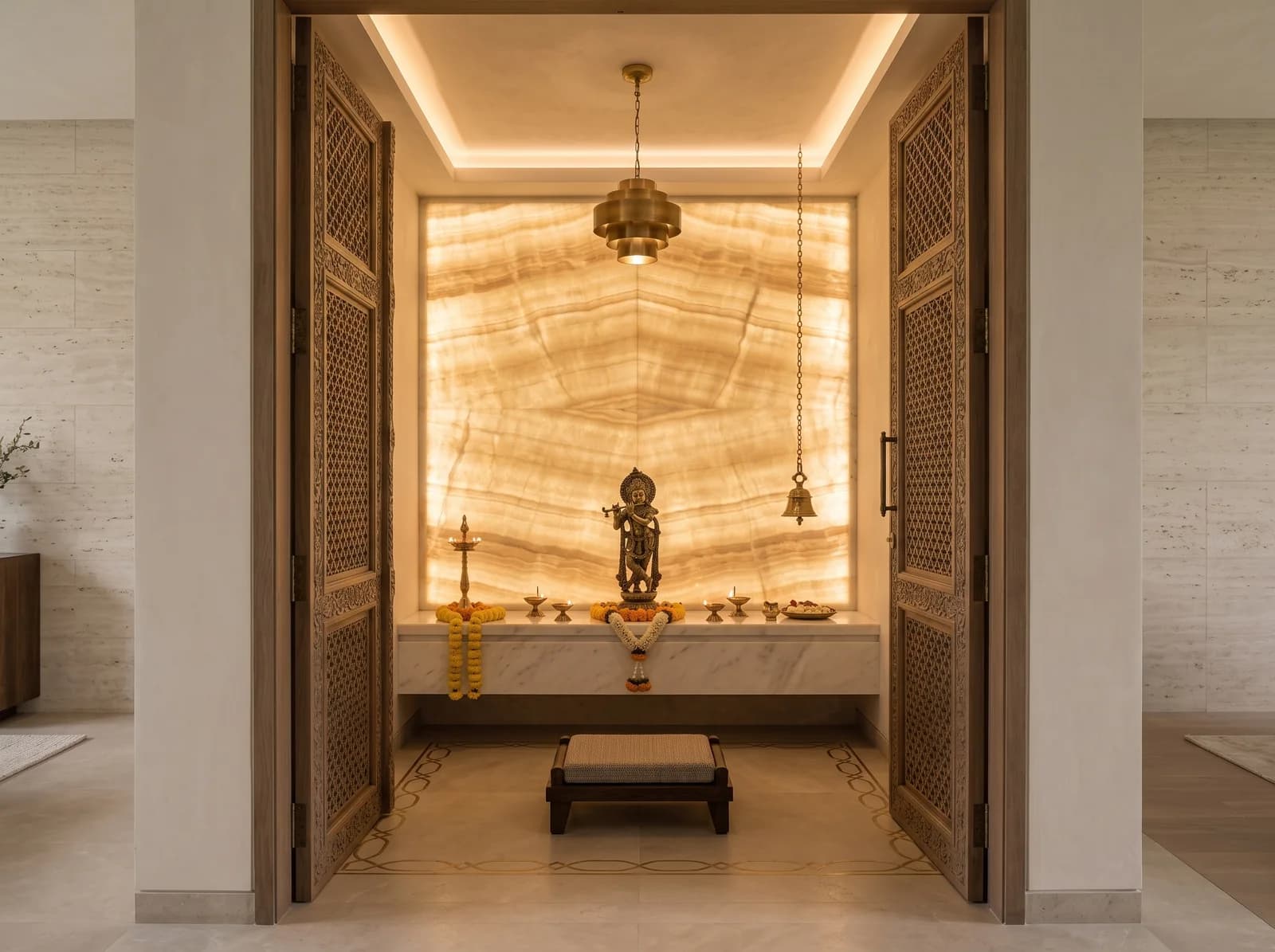
Where the plan allows a room of even five feet by six, it becomes the most atmospheric space in the house. A stone floor a step up from the corridor, so you know you have crossed a threshold. The altar on a plinth at a height for sitting or standing as the family prays. One wall in a stone that glows when lit from behind, onyx or a thin marble, so the deity is seen against light rather than under it. Doors that close, in a jaali that lets the lamp show through when they are shut. In the Limestone Arch Villa the doors are carved oak, the wall is honey onyx and the floor is the same limestone as the hall.
A full pooja room: onyx lit from behind, oak jaali doors, the house's own limestone underfoot. Studio visualisation.
The alcove
Most apartments offer an alcove rather than a room: a recess in a corridor wall or the end of the dining room. The trick is depth. Even eighteen inches, built out with a plinth of marble, a backlit panel and a pair of slim doors, reads as a place rather than a shelf. The Brass Veil Pooja Room in the boutique is drawn for exactly this situation: a marble altar, a backlit onyx wall, brass, and a veil of fine brass mesh that half-hides the deity when the family is not at prayer.
The Brass Veil Pooja Room: an alcove given depth with a plinth, a lit wall and a brass veil. Studio visualisation.
The cabinet, done properly
Where there is neither room nor alcove, the pooja space is a piece of furniture, and it should be the best piece of furniture in the house. Solid timber rather than laminate, because the lamp will be near it for thirty years. A marble or stone top, because oil and kumkum stain everything else. Doors that close fully so the deity is not on view during a dinner party. A drawer for the agarbatti, the matches and the small brass things, so nothing lives on top. And never a cabinet that shares a wall or a plinth with the television.
The materials: stone, brass, timber, light
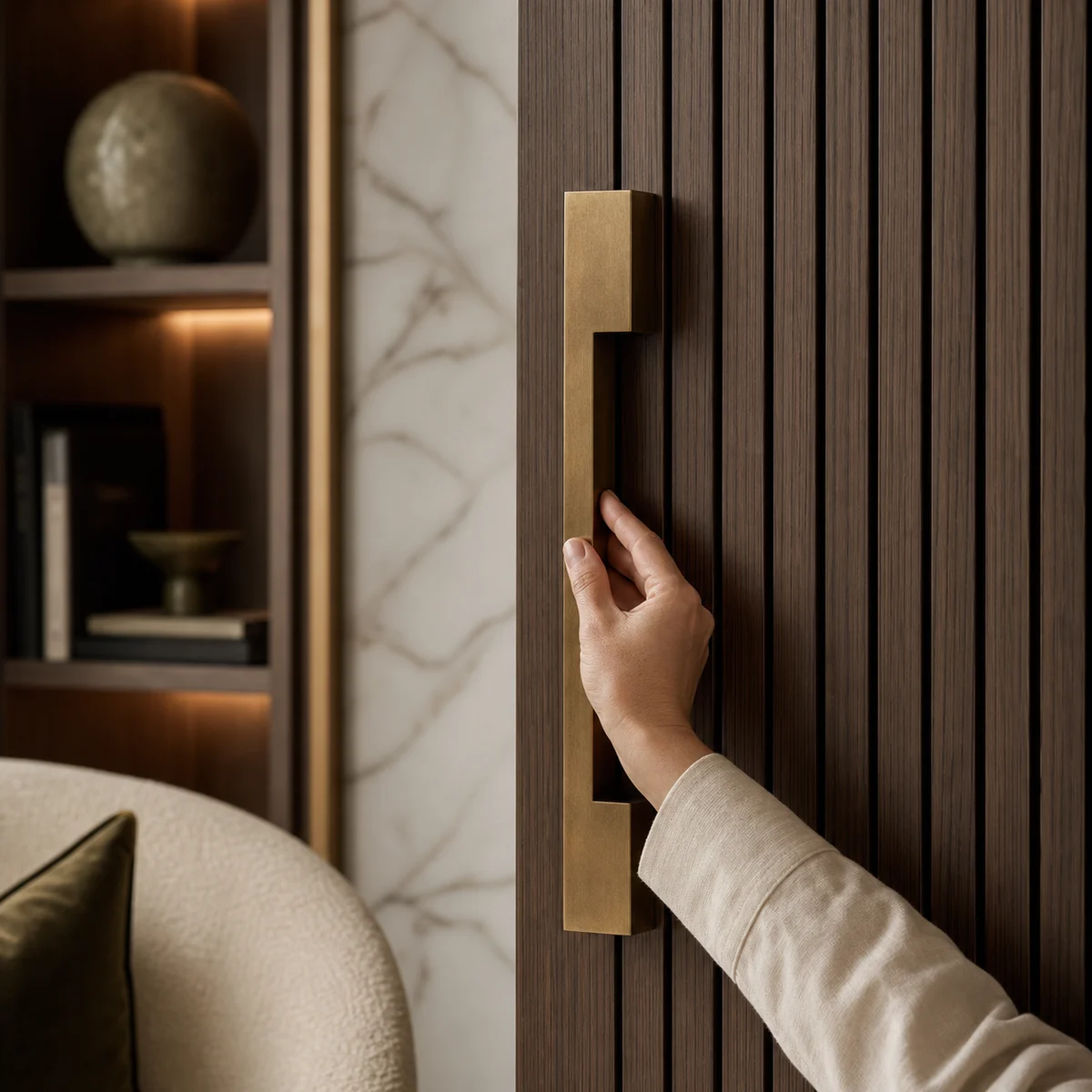
The pooja space fails most often by speaking a different language from the home around it: a white marble box with gold trim in a house of oak and linen. It should be built from the same vocabulary as the rest of the rooms, used at its most refined. If the home is oak and limestone, the pooja room is oak and limestone with an onyx wall. If it is walnut and terracotta, the doors are walnut and the floor is a warm stone. Brass is welcome everywhere here; it is the one metal that belongs to a pooja room in every tradition, and it darkens beautifully where hands touch it.


The three things a builder never provides
- A door that closes softly. On a jaali so the lamp shows through, on soft-close hinges so it never bangs during the evening aarti. When the family is not at prayer the room is closed, and the deity is not part of the décor.
- Extraction. The lamp, the camphor and the incense leave soot on a ceiling within a year. A small, silent exhaust ducted to the outside or into the bathroom's duct, on its own switch, and a ceiling in a wipeable finish. The stone wall behind the altar wipes clean; a painted one does not.
- Light that is warm and dimmable. The wall behind the deity lit from behind or from a concealed cove, at 2700 Kelvin, on a dimmer, so the room can be bright for the morning and only lamp-lit for the evening. Never a downlight on the deity's face, and never a colour-changing strip.
The small things that make it work every day
A pooja space is used twice a day for decades, so the daily details matter more than in any other room. A drawer or a niche for the oil, the wicks, the matches and the kumkum, at hand height. A shelf for the books. A stone or brass tray under the lamp for the drips. Somewhere to hang the bell. A socket for the electric diya, hidden. Storage for the festival things that appear four times a year. And a place to sit: a low stone bench or a cushion, because the most-used pooja rooms are the ones where somebody can stay a while.
A pooja room in each of the studio's styles
| Home style | Floor and plinth | Lit wall | Doors |
|---|---|---|---|
| Japandi | Pale oak step, white marble altar | Plain plaster, cove-lit | Slatted oak |
| Earthy Modern | Warm sandstone | Terracotta plaster, backlit niche | Walnut jaali |
| Quiet European | Limestone, one step up | Honey onyx, backlit | Fumed oak, carved jaali |
| Soft Minimalism | Travertine | Chalk plaster, concealed light | Curved oak, no handles |
| Contemporary Classic | Statuario marble | Panelled, with a brass halo light | Painted panel with brass mesh |
The same room in five languages. The altar, the plinth, the door and the light stay; only the materials change to match the house.
If the pooja space in your flat is a cabinet you settled for, or a corner you have not yet decided, tell us on the first call which deities live there and how the family prays. It will be in the first set of designs, drawn as a room, within seven days, and it costs nothing.
Questions we get asked
- Where should a pooja room be placed in an apartment?
- The north-east corner, which takes the first light of the morning, with the person praying facing east or west. If the north-east is a bathroom, use the next best corner, north or east, and give the space enough presence that its placement is not the first thing anyone notices.
- How do I design a pooja room in a small flat?
- Build an alcove with depth: a plinth in marble or stone, a backlit panel behind the deity, slim doors that close, a drawer for the small things, and warm dimmable light. Even eighteen inches of depth reads as a place. If there is no alcove, make the pooja unit the best piece of furniture in the home, in solid timber with a stone top, and keep it away from the television.
- How do I stop soot and incense stains in a pooja room?
- A small silent exhaust on its own switch, ducted outside or into the bathroom duct, a wipeable ceiling finish, and a stone wall behind the altar rather than paint. A stone or brass tray under the lamp catches the oil.
- Which materials are best for a pooja room?
- The same materials as the rest of the home, used at their finest: stone for the floor and the altar, brass for the fittings and the bell, timber for the doors, and a wall that can be lit from behind, such as onyx or thin marble. Avoid laminate and colour-changing LED strips.
Photographs on the Journal are the studio's own visualisations of rooms as designed, captioned as such. Figures are indicative Bengaluru bands, dated in each post, never a quotation.