What sustainable should mean on an interior quotation
Everyone is selling green interiors this year. Most of it is a word. The materials that actually earn the description, the ones that are greenwashing, and why the most sustainable home is the one you never have to redo.
- Written by
- The Élara Studio
- Published
- Reading time
- 6 min read
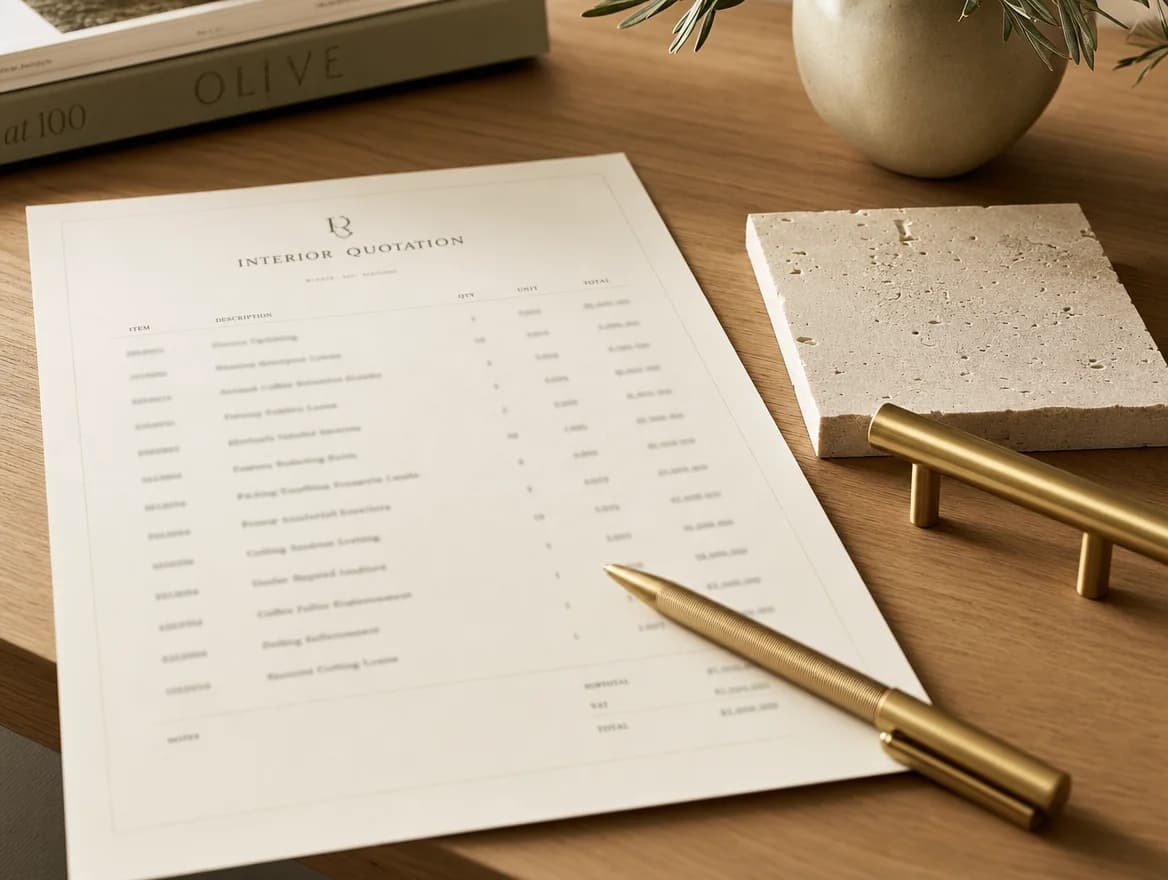
The word sustainable now appears in most interior brochures in the country and on almost no quotations. That gap is the whole story. A brochure can say anything. A quotation has to name a board, a paint, a hardware series and a warranty, and it is there, in the lines, that the word either means something or does not.
Lines, then. Which materials earn the description, which ones are borrowing it, and the one idea that matters more than any material: a home that lasts twenty years has half the footprint of one redone after ten.
The most sustainable home is the one you do not redo
Every kitchen ripped out and replaced is a truckload of board to a landfill and a fresh truckload of board from a forest. The greenest decision in interiors is not bamboo or cork; it is a kitchen that still works in year twenty, on carcasses that did not swell in the first leak, with hardware that did not fail at cycle forty thousand, in a finish nobody is embarrassed by. Longevity is a material property, and it can be specified.
- 10 yrs
- The ÉLARA Standard warranty on modular joinery, in writing
- IS:710
- The plywood grade wherever water can reach
- 100k
- Hinge and channel cycles we specify to, not adjectives
The three lines on an Élara quotation that do more for the planet than any bamboo.

The board: certified, graded, and named
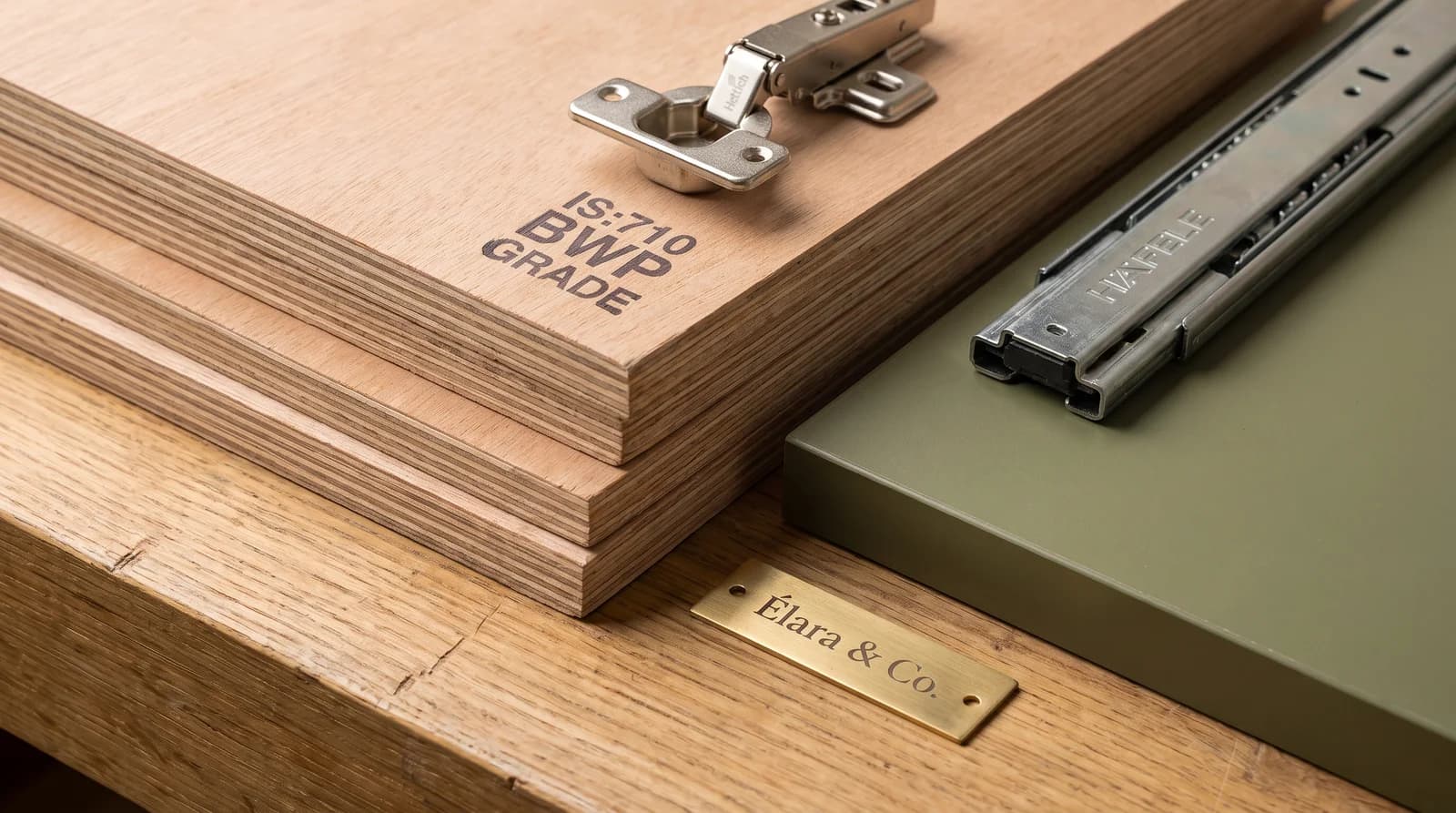
The bulk of any interior is plywood or a fibreboard, and this is where sustainable is won or lost. Look for two things on the line. A source certificate, FSC or PEFC, which says the timber was grown to be cut and replanted rather than taken from a forest that will not come back; several Indian mills now hold one and will say so on the invoice. And the right grade in the right place: IS:710 BWP where water can reach, IS:303 MR in dry rooms, HDHMR for shutters that take a lacquer. Over-specifying BWP everywhere wastes resin and money; under-specifying it in a kitchen guarantees the kitchen is redone.
The stamp is the specification: IS:710 on the edge, the grade you can check at delivery.
The finish: what is in the air of your bedroom
The sustainable question people feel most directly is the one about air. Paints, lacquers, adhesives and some laminates give off volatile organic compounds for months after a home is finished; it is the smell of a new flat, and it is not good for a child sleeping in it. The words to look for are low-VOC or zero-VOC on the paint, water-based PU rather than solvent-based on the lacquer, and E1 or E0 emission class on any fibreboard. Lime plaster is the quiet winner here: it is mineral, it emits nothing, and it absorbs some of what other materials give off. A home that has been finished properly should not smell like one.
The soft layer: natural fibres, and fewer of them
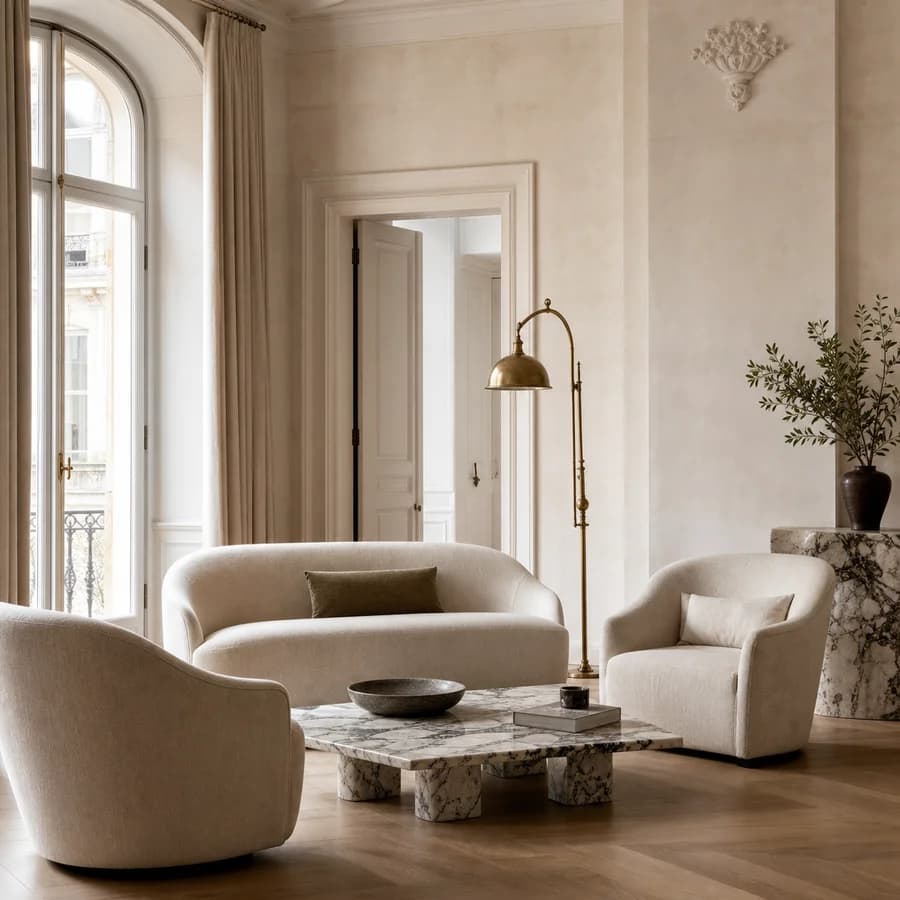
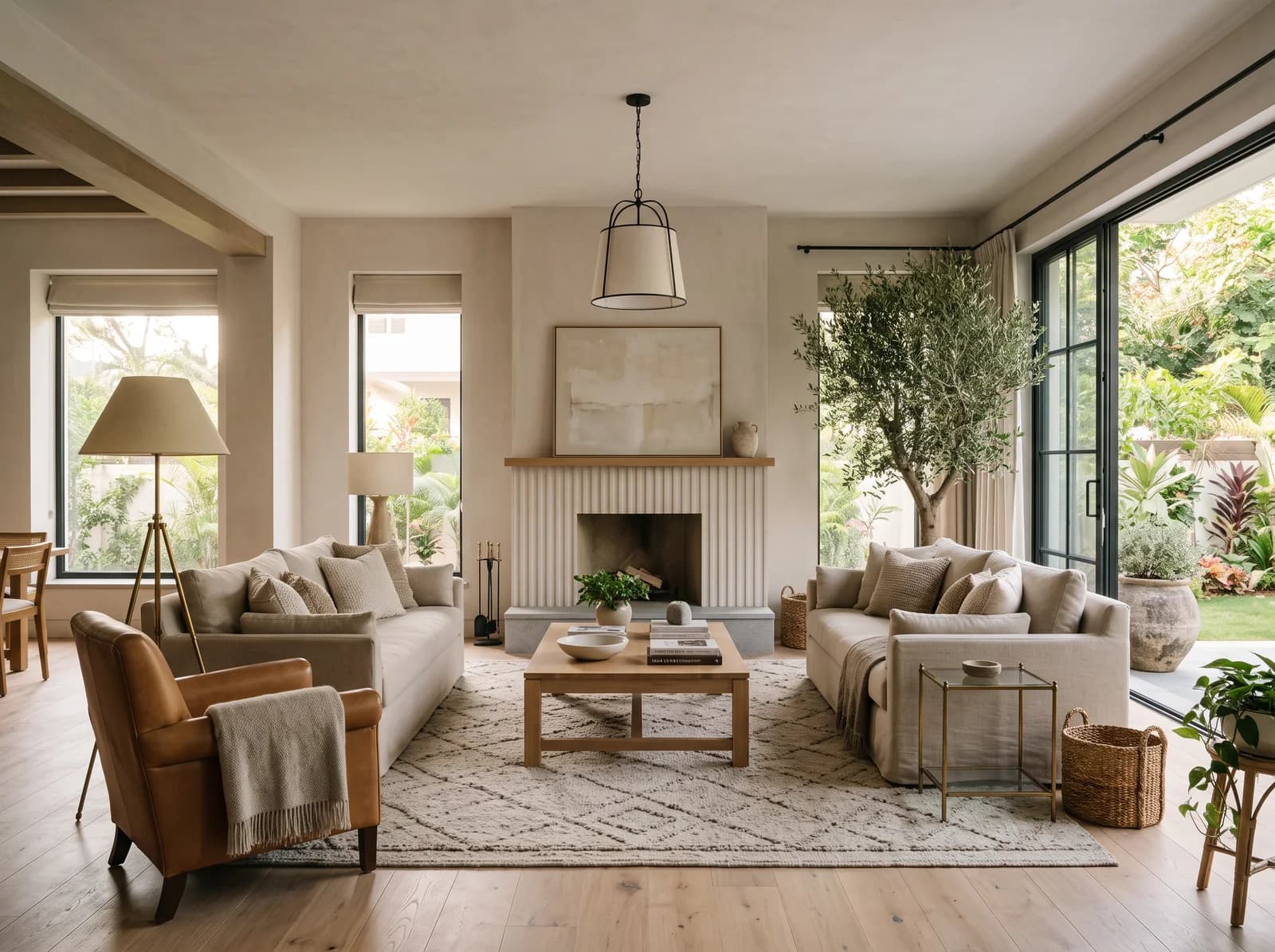
Linen, cotton, wool, jute and cane are the textiles and weaves that come from a field and go back to one. Polyester velvet, acrylic bouclé and synthetic rugs do not, and they also pill, static and hold heat in a way the natural fibres do not. The sustainable move in the soft layer is the same as the beautiful one: three good natural textiles in a room rather than eight synthetic ones, chosen to be washed and kept rather than replaced with the season.
What is greenwashing, and how to spot it
- 'Eco-friendly' with no certificate. Ask which one: FSC, PEFC, GreenPro, Griha. A word without a mark is a word.
- Bamboo everything. Bamboo is a fine material when it is solid and from a known source. Much of what is sold as bamboo board is a thin veneer on the same fibreboard as everything else, glued with the same resin.
- Recycled plastic furniture as a headline. Good in a garden chair. In a home it is often a way of not talking about the board, the paint and the hardware, which are ninety percent of the footprint.
- 'Natural finish' laminate. Laminate is a printed paper under resin. It can be a very good, durable material honestly described. It is not natural.
- Energy-saving lighting as the whole story. LED is now the default everywhere. It is not a sustainability feature; it is a light bulb.
Made in a factory, not on your floor
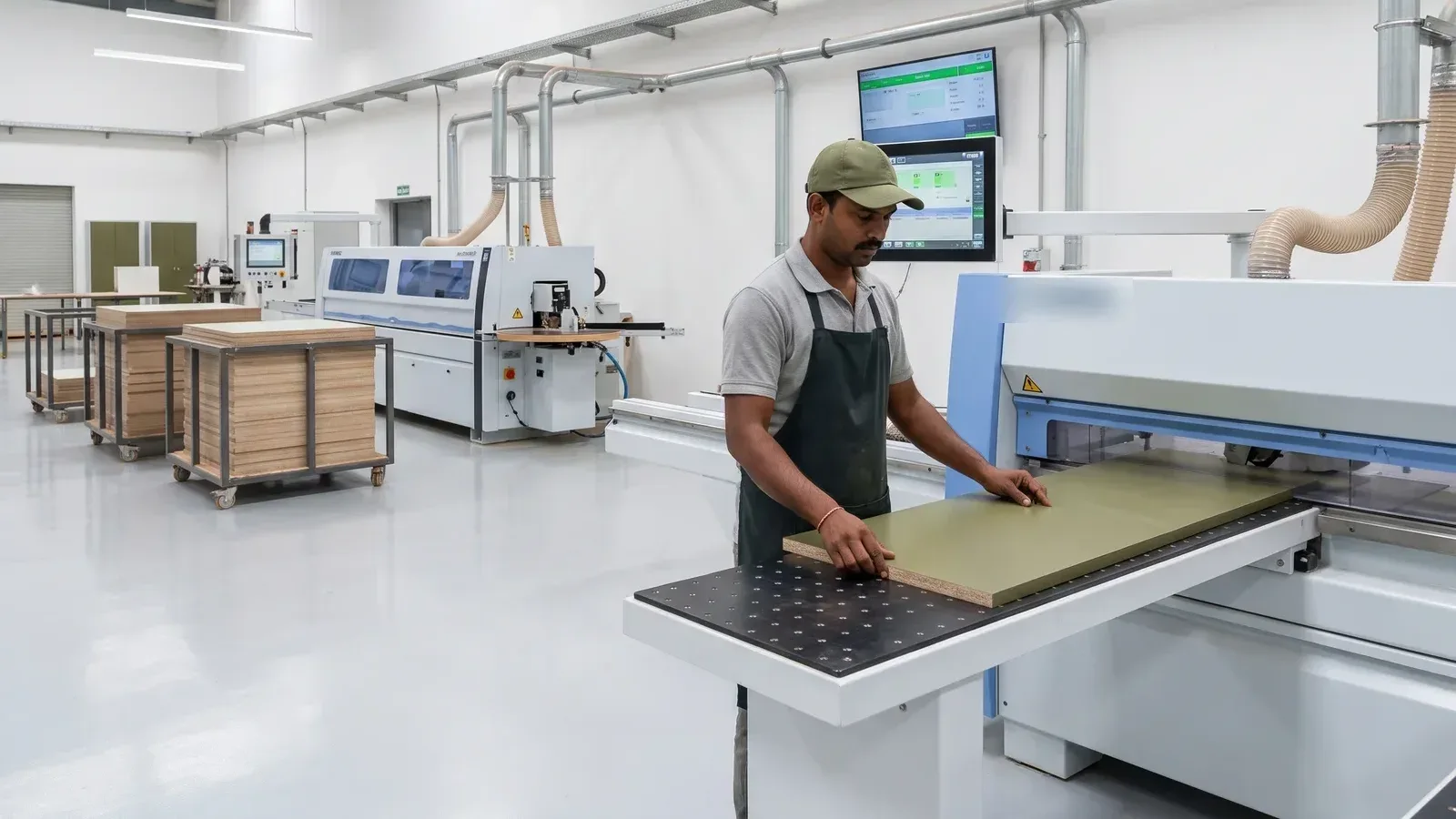
One of the least discussed parts of a sustainable interior is where the cutting happens. Joinery cut on site, in a flat, with a hand-held saw, wastes board, fills the home with dust that settles into the air-conditioning for years, and produces a fit that has to be corrected with filler and more finish. Cut on a CNC beam saw in a factory, from an optimised cutting plan, the same wardrobe uses less board, arrives with edges sealed, and fits the wall it was measured for. Élara's joinery is made in our own factory for this reason as much as for the finish.
The beam saw cuts from an optimised plan, so the offcut pile is small and the edges are sealed before they leave.
Repair, do not replace
The second half of longevity is the ability to fix things. A veneered door can be re-oiled; a laminate one cannot. A solid oak table can be sanded; a foil-wrapped one goes to the kerb. Unlacquered brass can be polished or left to darken; plated hardware peels. Modular joinery on a good hardware system can have a hinge or a channel replaced in ten minutes, a decade later, if the series is known. This is why the quotation names every series: not for the day it is fitted but for the day it needs a part.
A checklist for the quotation
| Line | Ask for | Walk away from |
|---|---|---|
| Plywood | IS:710 wet areas, IS:303 dry, source certificate named | 'Good quality ply', 'marine grade' with no IS mark |
| Shutters | HDHMR or ply with E1/E0 emission class | Particle board, unspecified MDF |
| Paint | Low or zero VOC, brand and code | 'Premium emulsion' with no data sheet |
| Lacquer | Water-based PU, coats stated | Solvent-based, coats unstated |
| Hardware | Make and series, cycle rating | 'Premium soft-close' |
| Textiles | Linen, cotton, wool, jute by composition | 'Velvet' with no fibre named |
| Warranty | Ten years on joinery, in writing, with a number to call | 'Lifetime' with no paper |
If the quotation can answer every line, the word sustainable can stay on the brochure.
Sustainability in a home is not a style, and it does not photograph. It is a set of lines on a piece of paper and a factory that honours them. If you would like to see how Élara writes those lines for your own home, the first design and its material board are free, and every board on the quotation that follows will carry its grade and its source.
Questions we get asked
- What makes an interior design sustainable?
- Longevity first: joinery on certified, correctly graded plywood with hardware rated for a hundred thousand cycles, so the home is not redone in ten years. Then low-VOC paints and water-based lacquers for clean indoor air, natural textiles, joinery cut in a factory from an optimised plan rather than on site, and a written warranty that holds the studio to all of it.
- Is bamboo plywood better than regular plywood?
- Solid bamboo from a known source is a fine material. Much of what is sold as bamboo board is a thin bamboo veneer over ordinary fibreboard, glued with the same resin. A certified hardwood ply of the right IS grade, from an FSC or PEFC source, is usually the more honest choice.
- Which paint is safest for a child's bedroom?
- A low-VOC or zero-VOC emulsion with a published data sheet, or lime plaster, which is mineral and emits nothing. Ask for the brand and the code on the quotation, and let the room air for two weeks before it is slept in.
Photographs on the Journal are the studio's own visualisations of rooms as designed, captioned as such. Figures are indicative Bengaluru bands, dated in each post, never a quotation.